


grill repair specialists
Blue flame,
an even sear.
We fix the grill.
Repairs for the grill itself, built in, on a cart, infrared or pellet.
Tell us how the fire is behaving. We’ll set it right.
- Burners, venturi tubes, igniters
- Valves, regulators, gas conversions
- Infrared burners, rotisseries, pellet feed
What to expect
Experienced technicians
More than 12 years in appliance repair
Upfront pricing
The cost of the repair in writing, before any work begins
OEM parts on order
Original manufacturer parts ordered against your model number, never third-party substitutes
Warranty on our workmanship
Every repair is backed by a warranty on the work we performed
Your next step
to a working grill.
A few details now.
A little less to worry about.
Tell us what the grill does
Pick the kind of grill and say what the flame, the igniter, the heat or the pellet feed is doing.
Pick a day
Any open date, then a morning or an afternoon arrival, whichever leaves the grill cool and free.
Where the grill stands
The street address, how to reach the patio, deck or rooftop, and a phone the technician can reach on the way.
Every grill carries a rating label with the make, the model, the serial number and the gas it was built for, propane or natural gas. On a built-in grill head it is usually on a metal tag that slides out under the control panel or sits on the inside of the lower front; a cart grill tends to keep it inside the cart door or on the back of the frame, and a pellet grill on the side or back of the hopper. A clear photo of that label tells us which grill, which gas and which burners we are coming to.
or call (844) 660-6426
Loading appointment form…
The appointment form couldn’t load. Please try again.
Four steps,
and no surprises.
The three steps in the form are how you book. These four are what actually happens once a technician is standing on your patio.
The gas and the grill, checked first
The technician checks the tank or the gas line, the regulator and the hose before anything is lit, then lights each burner in turn and watches the flame, the ignition and the heat across the grate. Grates, heat shields and burners come out only in the technician's hands, with the gas closed and the grill cool enough to work on.
What failed, and what it costs
At the grill, the technician names the part that failed, rusted or clogged and its price in the same breath, and orders nothing until you agree. If a new grill is the better use of the money, you hear that plainly as well.
Parts on the truck
Igniter electrodes, spark modules and batteries, hoses and regulators, thermocouples, common probes and universal burner parts often travel with us. A burner set, a valve manifold, a rotisserie motor, a pellet controller or a heat shield sized to one firebox is ordered; put the serial in the booking and that order may be moving before we arrive.
Lit before we leave
With the part fitted and the grates back, every burner is lit while you watch: a clean blue flame at each port, the igniter catching on the first try, the heat even from end to end, the rotisserie turning or the pellet grill climbing to its setting and holding it.
Not every grill
breaks the same way.
A built-in gas grill head sits in a counter cutout on its own gas line; a freestanding gas grill rolls on a cart, usually with a propane tank below; an infrared grill puts a ceramic or mesh burner under the grate for fierce, direct heat; and a pellet or hybrid grill feeds wood pellets into a firepot with an auger and a fan, or lets charcoal share the firebox with gas. Which one is yours?
All grill types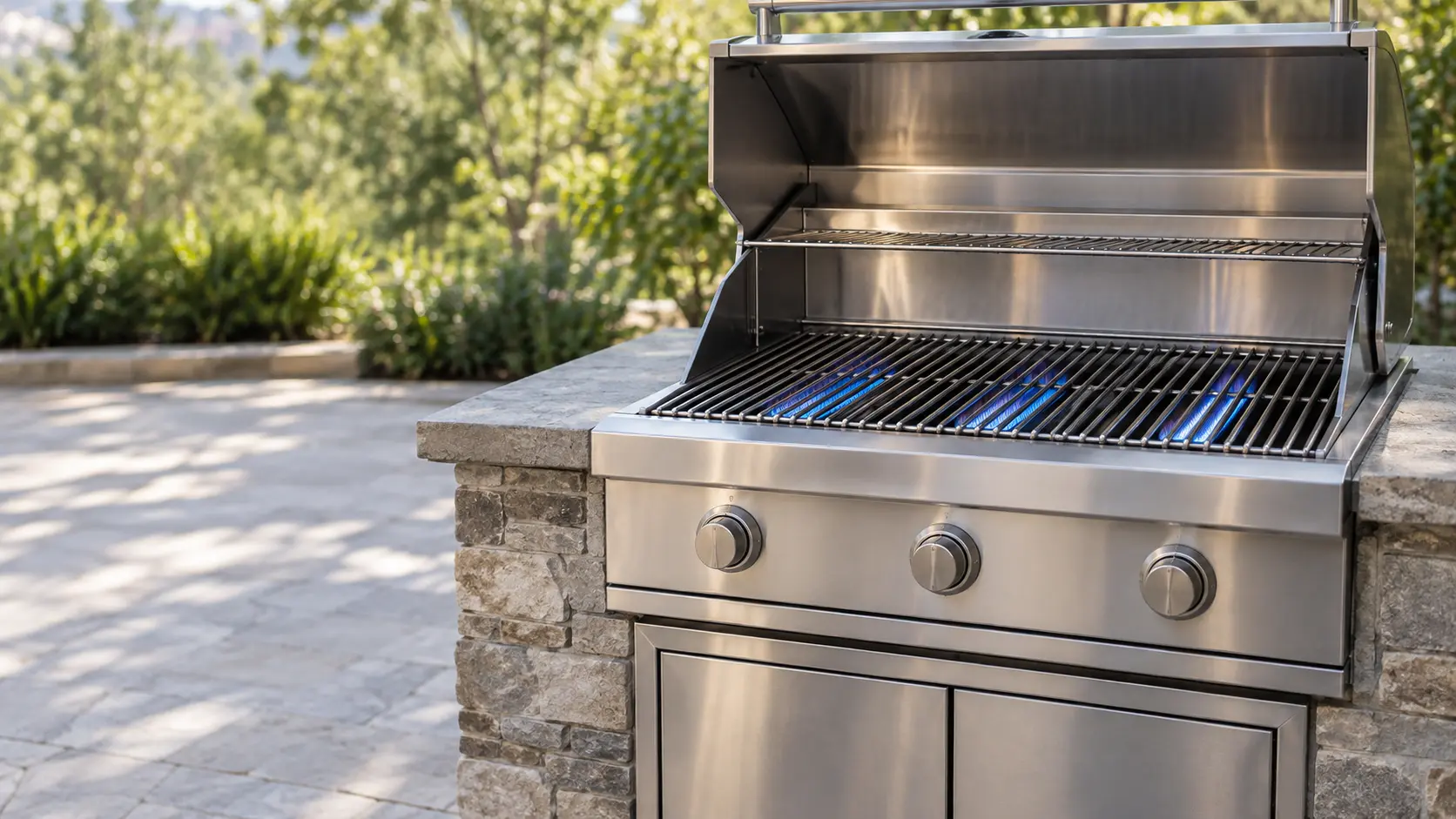
Built-in gas grill
A stainless grill head dropped into a masonry or steel island, fed by a tank or the house gas line, with its burners, knobs and lid working in open weather.

Freestanding gas grill
A gas grill on its own cart with wheels, side shelves and a propane tank below, or a hose to a house gas outlet, rolled into place on the patio.

Infrared grill
Grills that cook with radiant heat: ceramic or mesh infrared burners, sear stations beside the main burners, and radiant glass or emitter plates over a gas flame.
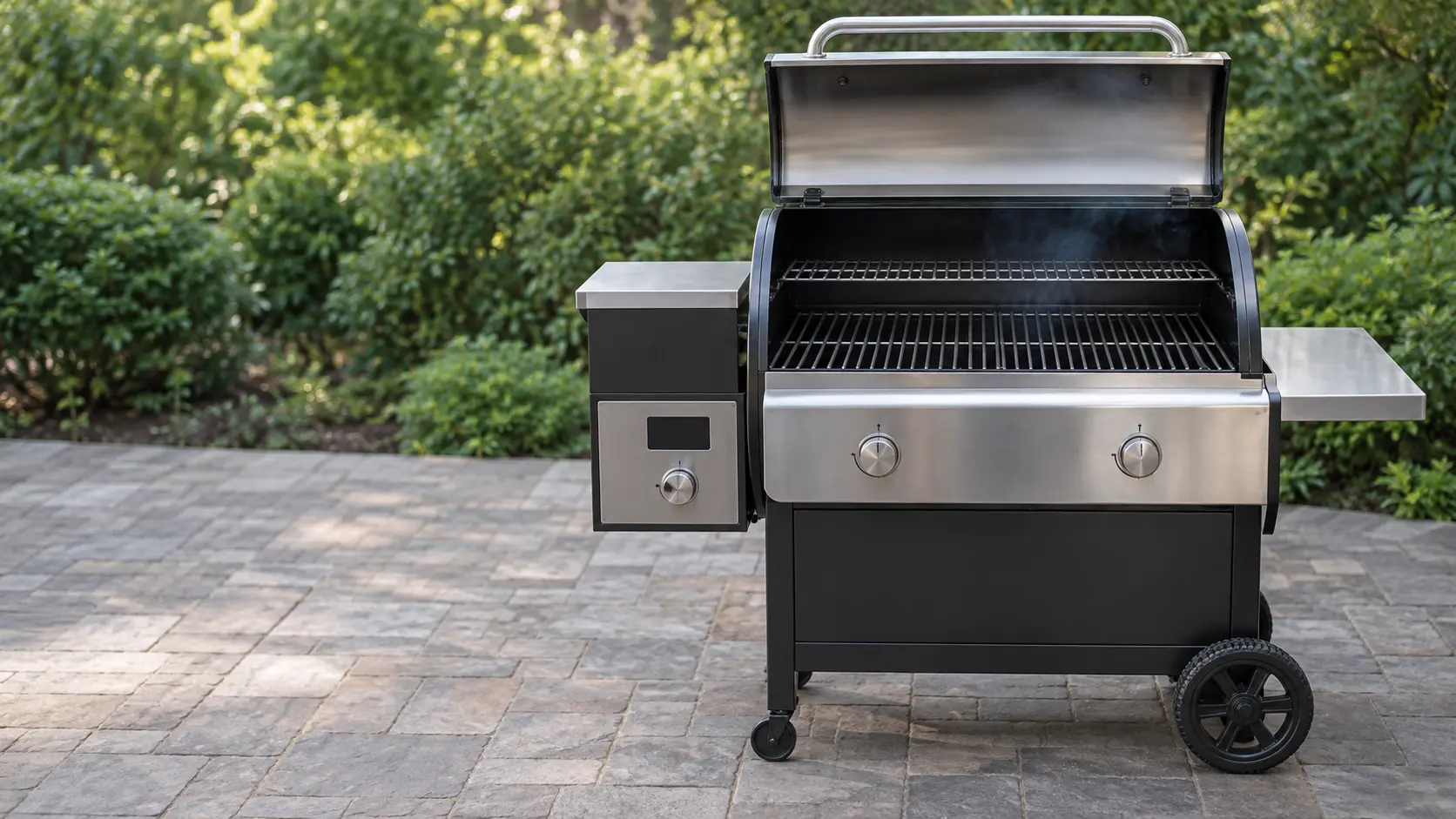
Pellet and hybrid grill
Pellet grills with a hopper, auger and electric igniter under a digital controller, and hybrids that burn gas, charcoal or wood in the same firebox.
Every kind we serviceAll grills, side by side
The archive puts the 4 types against each other: how to tell which you own, what fails on each, and which manufacturers build them.
How to tell yoursWhat fails on eachWho makes them Open the type archiveA burner that catches on the first click.
Heat that reaches both ends of the grate.
Perhaps the igniter snaps and snaps without a flame, the burners only reach a low blue flicker, one end of the grate stays pale while the other chars, the flames run tall and orange, grease flares up every time the lid opens, or the pellet grill stops feeding and lets the fire go out. Pick the sign you saw most recently; its page traces it back to the parts it usually comes from and only asks about a technician at the very end.
 All 17 problems
Grill Gas Smell at the Burners or the Tank: What to Do Now
A gas smell from grill burners, the hose or the propane tank is the sharp added odor of propane or natural gas, noticed with the lid up, while lighting, or with every knob already off.
Grease Fire in the Grill That Won't Die Down
A grease fire in grill fireboxes is flame that keeps burning after the food is off: a blaze from the drip tray, a sheet of fire under the grates, or thick smoke pouring out around the lid.
Grill Flashback: Flames Behind the Knobs or Under the Panel
Grill flashback is flame burning where it should not: behind the control panel, around the knobs or at the front ends of the burner tubes, often with a soft roar, a hot panel or melting knobs.
Grill Knob Won't Turn Off: Burner Still Lit at Off
A grill knob won't turn off when the burner keeps burning with the pointer at off, the knob spins round without stopping, or it jams partway while a flame stays lit under the grate.
Gas Grill Won't Light: Knob On, Clicking, No Flame
A gas grill won't light when the knob turns and the igniter clicks yet no flame appears, or when one burner catches and the others stay dark beside it.
Grill Igniter Not Sparking or Clicking Weakly
A grill igniter not sparking gives a dead button, a faint click with no visible spark, a spark that jumps to the wrong spot, or a hot-surface igniter that never glows orange.
Familiar brands. Expert care.
For the brands
on your patio.
Independent repair service. Not affiliated with, authorized or endorsed by any manufacturer. Brand names and model numbers are the property of their respective owners and are used here for identification only, to describe the appliances we service.
What a repair
usually costs.
Weigh the repair against what a new grill of the same class would really cost you, delivered, set in place, connected to its gas and checked, not only its catalog price. A built-in head also brings the question of whether a new one fits the old cutout, which often decides the matter in favor of repair. Burners, igniters, heat shields, a regulator and a cleaning are small next to a new grill, and a valve or a controller is usually still worth it. Where it tips the other way is a firebox or hood rotted through, or a grill so old its parts are no longer made; then the technician writes out both sums and the call is yours.
| Repair | Relative cost | Notes |
|---|---|---|
| Venturi cleared, burner ports opened, or rusted main burners replaced | low to moderate | Brushing webs out of the venturi necks and opening the ports is the light end. One or two new burners sit in the middle, and a full set of cast or stainless burners for a wide built-in head, fitted and each flame set, is the fuller job. |
| Spark module, piezo button, electrode, ignition wire or hot-surface igniter | low | A new battery module or a single electrode with its gap set costs little beyond the visit. Several electrodes and wires run behind the panel, or a hot-surface igniter on a premium head, add parts and time. |
| Burner valve, knob, regulator, hose or orifices for a gas conversion | low to moderate | A new regulator and hose on a cart grill, leak-checked, sits low here. A burner valve replaced behind the panel is a step up, and a full propane-to-natural-gas conversion with every orifice changed is the larger job. |
| Ceramic infrared tile, mesh or glass emitter, or a complete sear burner | moderate | Correcting a sear burner's ignition and burning off light fouling is the smaller end. A new ceramic tile or screen is a step higher, and a complete infrared burner assembly from the maker is the dearest part of this work. |
| Rotisserie motor, spit, bushing, or the rear infrared back burner | low to moderate | A bushing or a straight new spit is modest. A replacement rotisserie motor sits in the middle, and a back burner with its igniter and valve, fitted along the rear wall of the hood, is the fuller job. |
| Flavorizer bars, heat plates, briquettes or radiants, cooking grates and grease tray | low to moderate | A few heat shields on a small grill are the light end. A full set of shields and grates for a wide head, or ceramic radiants with a new grease tray and the ledges they rest on straightened, moves the job up. |
| Auger clearing, auger motor, hot rod, combustion fan, probe or controller on a pellet grill | moderate | Clearing a jammed auger tube and a new probe or hot rod sit low in this band. An auger motor or a combustion fan is a step higher, and a new controller for a connected pellet grill is the dearest part here. |
| Hood lights, knob lights, transformer, power supply, switches and harness | low to moderate | A lamp, a lens or a sealed connector is modest. A transformer or a power supply is a step up, and a harness replaced where heat or rodents damaged it along the firebox takes the most time. |
| Deep cleaning of the firebox, burners and grease path, with a gas and spark safety check | lowest | A full take-down, cleaning and leak check of one grill is the smallest job on this list. Any burner, hose or igniter found failing during it is priced as its own repair, before any work is done. |
9 metros,
one appliance.
Where a grill stands decides what wears it out: salt air that rusts burners and grate supports within a few miles of the shore, humid summers that swell pellets in the hopper, desert sun that bakes knobs and covers, balconies and rooftops where the rules on propane decide the grill, and long winters that leave a nest in every venturi tube by spring. Each note is about the grills in one town and the weather they cook in, and leaves the sights to others.
All service areasTampa BayFL · 31 areas
Tampa Bay grills on lanais, pool decks and waterfront patios nearly every month, and salt air, humidity and summer storms wear burners, grates and igniters faster than they would inland. Frequent summer lightning can take out grill lights and pellet controllers. Before a hurricane the tank is closed and the grill secured, and afterward it stays unlit until the burners and hose are dry and checked.
OrlandoFL · 30 areas
Orlando grills serve residents and a large share of vacation-rental guests, so the same grill may be lit by a new stranger every week, wearing knobs, igniters and grates quickly. Afternoon storms, humidity and screened pool cages shape where grills stand, and a grill under a cage needs clearance from the screen and its roof. Newer subdivisions often run a natural gas stub to the patio, and rental hosts book cleaning and safety checks between seasons.
Miami / South FloridaFL · 47 areas
South Florida grills all year, with no winter to rest the burners, so salt air, humidity and summer storms do the wearing instead. Many condo rules keep gas and charcoal grills off balconies, so towers share pool-deck grills, while houses keep built-in heads or cart grills near the pool or the dock. Before a hurricane the tank is closed and the grill secured or brought in, and afterward nothing is lit until the burners and the hose have been checked.
New York MetroNY · 75 areas
The New York area grills in a short, intense season, from late spring into early fall. Fire rules keep propane off most apartment terraces and balconies, so city grills tend to be natural gas on private terraces and roofs, while brownstone gardens and suburban yards use carts and built-in heads. Winter is spent under a cover or in storage, and spring startup is when rusted burners, dead igniters and nests come to light.
HoustonTX · 36 areas
Houston treats the grill and the smoker as year-round tools: brisket, fajitas and crawfish boils run from spring through fall and much of winter. Humidity rusts burners, heat shields and grease trays, insects nest in venturi tubes, and after a hurricane or a summer storm cuts the power for days, gas grills are pressed into daily use, always in open air, never in a garage where fumes collect. Pellet grills need power, so they wait until it returns.
ChicagoIL · 50 areas
Chicago grills in a season framed by snow: late spring through early fall, with tailgates and holiday cookouts packed into those months. Winter is spent covered or stored, where condensation, salt and rodents do the damage, and many multi-unit buildings keep grills off wooden porches and balconies. Lake Michigan wind makes wind guards useful, and a spring startup check catches cracked hoses, rusted burners and nests before the first cook.
Los AngelesCA · 95 areas
Greater Los Angeles grills in every month, from Valley pool decks to hillside terraces and beach patios, so burners, igniters and grates wear on a year-round cycle. Inland heat and Santa Ana winds dry out hoses and drive dust into the ports, the coast brings salt, and on red-flag days local limits on outdoor fires apply in the hills. Being a seismic zone, the region also calls for a flexible gas connector on any built-in grill, which a visit confirms.
San DiegoCA · 31 areas
San Diego grills all year in two climates: marine-layer damp and salt on the coast, dry heat inland, with canyons that burn in fire season. Coastal grills lose grates and burners to rust while inland ones lose hoses and knobs to sun, and on red-flag days local limits on outdoor fires may apply. Earthquakes are part of life here too, so a built-in grill's gas line should end in a flexible connector.
San Francisco Bay AreaCA · 74 areas
The Bay Area cooks over gas and pellets in three climates at once: fog and salt on the city's decks, mild yards down the Peninsula and real heat in the inland valleys. Wind is the constant, which is why wind guards and infrared burners earn their place here. The region is a seismic zone, where a flexible gas connector matters, and on red-flag days the local rules on outdoor fires and embers are worth checking before a pellet grill is lit.

Answers before
you book.
We are hosting this weekend. How soon can someone look at the grill?
Which grills do you repair?
How do I get the grill ready for the technician?
What does a grill repair usually cost?
My grill is ten years old. Should I fix it or buy new?
There is a gas smell at the grill. What comes first?
Work out what
you are dealing with.
Split by what you are trying to find out rather than by what part of the appliance it concerns.
All 27 guides



Curious what the repair might come to? That has a page of its own, since no honest figure exists until someone has lit the grill and watched the flame — grill repair cost.
Back to your everyday
Let’s get your grill working again.
Three short steps, a window that suits you, and a price for the actual repair before any work starts.