The layer between the flame and the grate
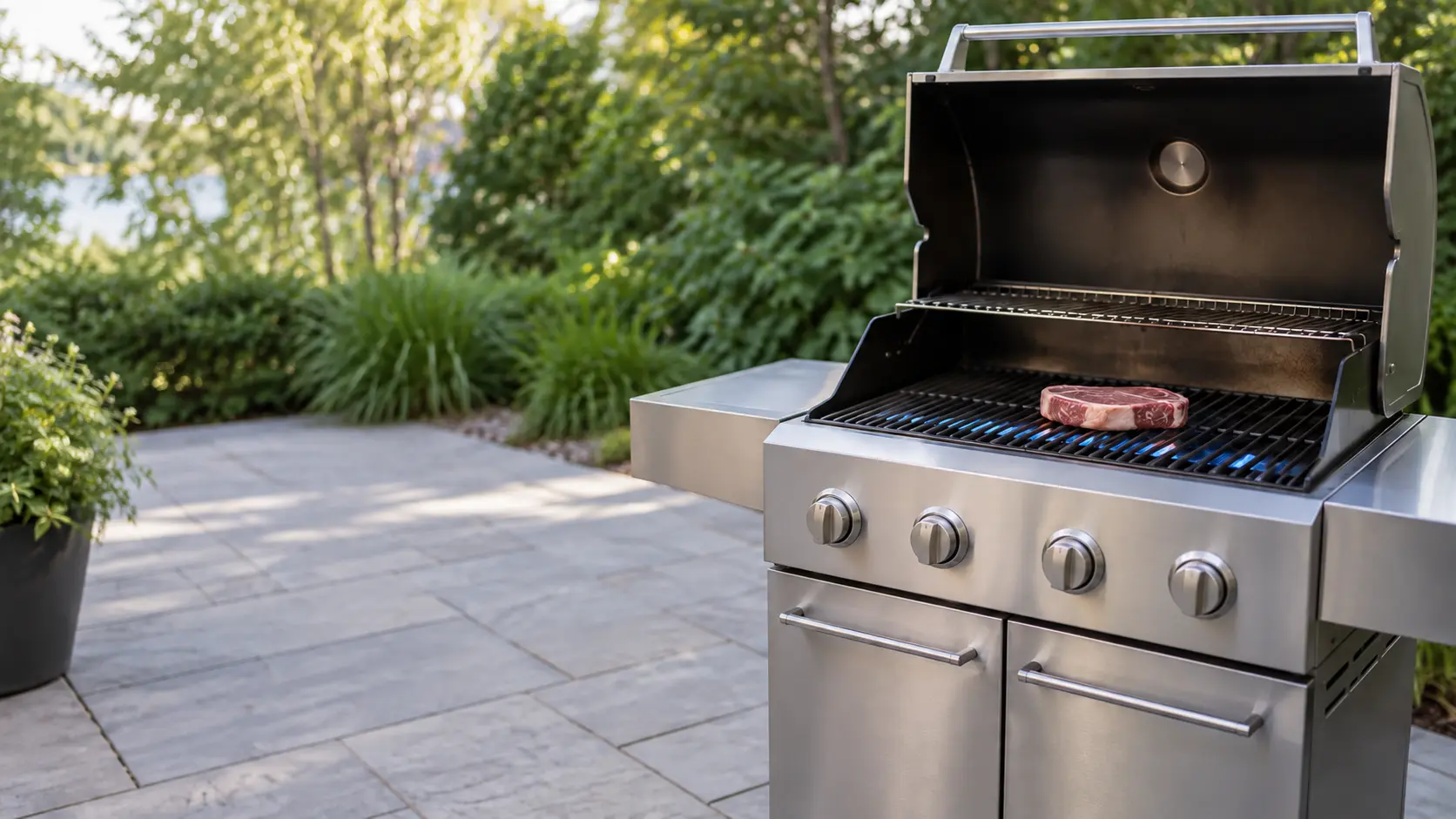
A bare burner would scorch a strip of food right above each flame and leave the gaps between them cool. Grill heat shields and their relatives even that out: it heats up, radiates across its whole width and catches drippings before they reach the ports. Weber explains that its angled bars turn drippings into smoke that flavors the food, while anything left over runs down the slope and away from the burners, which reduces flare-ups and keeps the ports from clogging.
Each maker builds the layer its own way, and knowing which one you have tells you how to clean it.
- Weber: angled steel Flavorizer bars running front to back over each burner.
- Blaze: flame tamers over the burners, plus removable heat zone separators between them.
- Lynx: trays of ceramic briquettes over the brass burners.
- Coyote pellet grills: a heat shield over the firepot.
- TEC: radiant glass panels, covered in the guide to infrared and standard burners.
Source: Weber — Genesis II LX gas grill owner's manual — Flavorizer bars vaporize drippings and funnel the rest away from the burners, reducing flare-ups and clogging; scrape with a plastic scraper, brush if needed; gloves for rough surfaces; not in a sink, dishwasher or self-cleaning oven; carbonized grease flakes from the lid interior like paint.; Blaze — Professional grill instructional book — Flame tamers and removable heat zone separators; clean after each use at high for 10 to 15 minutes with the hood closed, then a stainless bristle brush; clean the drip tray after each use with hot soapy water once cool.; Lynx — Professional grill care, use and installation manual — Ceramic briquettes burn off drippings; for large spills flip the cooled trays and run the burners on high 5 to 10 minutes, brush, cool before reinstalling; replacement trays from Lynx or dealers; clean racks hot with a wet brass brush; drip tray cleaned after each use and drained after rain; no foil on racks or drip pans, which can melt knobs and ignition modules.; Coyote — Stainless steel pellet grill user manual — Heat shield over the burner pot; an uncovered drip tray fills with water and spills grease into the cart; no foil, sand or absorbent in the housing bottom, which can cause a grease fire.
Cleaning bars and flame tamers
Work from the top down, on a grill that is off and cool whenever parts are being lifted out. The grates come out first, then the layer beneath them, and only then are the burners exposed for a look.
Weber: a plastic scraper first
Weber's Genesis II LX manual has owners scrape the Flavorizer bars with a plastic scraper, then brush them with a stainless bristle brush only if needed. Over time rough edges form on the bars, so the maker suggests gloves when handling them, and it rules out cleaning the bars or grates in a sink, a dishwasher or a self-cleaning oven.
Blaze: burn it off, then brush
Blaze treats its flame tamers, heat zone separators and grates as one set to clean after every cook. The burners run on high for 10 to 15 minutes with the hood closed so food and grease burn away, and a stainless bristle brush removes what is left. Deeper cleaning waits for a cold grill.

Ceramic briquettes and their trays
Lynx notes that its ceramic briquettes normally burn off drippings on their own. For a larger spill that does not, the maker's method starts with a completely cool grill: take out the racks, lift each briquette tray by its front edge and pull it toward you, flip the tray over and set it back over its burner. The burners then run on high for 5 to 10 minutes to burn the briquettes clean, a soft brush sweeps off what remains, and the trays cool completely before they are turned back.
Lynx cleans its grill racks the other way round, straight after cooking while they are hot, with a brass bristle brush dipped often in hot water and a long mitt against the steam. Replacement briquette trays come from Lynx or its dealers.
When briquettes start to crumble
Briquettes that break into pieces or fall out of the tray leave gaps, and each gap is a spot where drippings reach a burner directly and a hot stripe appears on the grate. A tray with several gaps, or one that has cracked, is due for replacement rather than another burn-off.
Source: Lynx — Professional grill care, use and installation manual — Ceramic briquettes burn off drippings; for large spills flip the cooled trays and run the burners on high 5 to 10 minutes, brush, cool before reinstalling; replacement trays from Lynx or dealers; clean racks hot with a wet brass brush; drip tray cleaned after each use and drained after rain; no foil on racks or drip pans, which can melt knobs and ignition modules.
Following the grease down to the tray
Whatever the shields do not burn off runs to the drip tray, and that tray is where grease fires start. Lynx and Blaze both ask for it to be cleaned after each use, once the grill has cooled, with hot soapy water. Lynx adds a check after rain on an uncovered grill, when the tray may need its drain plug removed to let water out. Coyote warns that a tray left full outdoors overflows grease and water into the cart.
Foil is the common shortcut the makers reject. Lynx says lining racks or drip pans with it changes the airflow and can trap enough heat in the control area to melt knobs and ignition modules; Coyote says foil, sand or any absorbent in the bottom of the housing keeps grease from reaching the tray and can lead to a grease fire. If grease does catch, turn the gas off at the cylinder or shutoff and the knobs off, close the lid only if that can be done safely, never use water, and call 911 if it spreads.
- After every cook: burn-off, brush and a look at the drip tray.
- Every month of regular use: shields and bars out and scraped, tray washed.
- Each spring and fall: everything out, burners checked beneath, worn parts listed.
- After rain on an uncovered grill: tray emptied of water before the next lighting.
Source: Blaze — Professional grill instructional book — Flame tamers and removable heat zone separators; clean after each use at high for 10 to 15 minutes with the hood closed, then a stainless bristle brush; clean the drip tray after each use with hot soapy water once cool.; Lynx — Professional grill care, use and installation manual — Ceramic briquettes burn off drippings; for large spills flip the cooled trays and run the burners on high 5 to 10 minutes, brush, cool before reinstalling; replacement trays from Lynx or dealers; clean racks hot with a wet brass brush; drip tray cleaned after each use and drained after rain; no foil on racks or drip pans, which can melt knobs and ignition modules.; Coyote — Stainless steel pellet grill user manual — Heat shield over the burner pot; an uncovered drip tray fills with water and spills grease into the cart; no foil, sand or absorbent in the housing bottom, which can cause a grease fire.
Signs a shield, bar or tray is finished
These parts are consumables, and running one past its life costs more than the part. A bar with holes lets drippings fall straight onto a burner, which then clogs; a sagging shield can touch the flame and deflect it. Replace when you see any of the following.
- Holes or rust-through anywhere along the length.
- Sagging or warping, so the part rocks or touches the burner.
- Rust flakes dropping onto the burners each time the part is handled.
- Porcelain coating chipped away over wide areas.
- Cracked briquette trays or crumbling briquettes.
Ordering the right part
Shields and bars differ in length, angle and number from one model to the next, even within one maker's lineup. Order by the model number on the rating label, and measure the old part before throwing it away. Parts made by the grill's own maker fit the brackets and the burner spacing they were designed for.