


Freestanding Gas
Grill Repair
A gas grill on its own cart with wheels, side shelves and a propane tank below, or a hose to a house gas outlet, rolled into place on the patio.
Mon–Sat, 8am–8pm
- 4 things that fail on it
- 22 makes build it
- 7 problems it shows
Book a visit
Three short steps, about a minute.
or call (844) 660-6426
Loading appointment form…
The appointment form couldn’t load. Please try again.
Is yours
a cart?
A freestanding gas grill is the grill most owners picture: a cooking box on a cart, two or four casters, folding or fixed side shelves, and a cabinet or an open frame below that holds a twenty-pound propane cylinder. The tank connects through a hose with a regulator on its end, and that regulator carries a safety feature that surprises many owners: if a knob is open when the tank valve is turned, it senses a flow that looks like a leak and lets through only a trickle, so every burner sits low and lazy until the system is reset. Natural-gas carts run on a long quick-disconnect hose from a patio outlet and use larger orifices. Inside the box the parts are the same family as a built-in's, only lighter: tube or cast burners, flame tamers or flavorizer bars, a spark igniter on a battery or a push-button piezo, and a grease pan with a disposable tray. Carts are moved, bumped, stored under a cover and left in the rain, and their repairs lean toward hoses, regulators, wheels and frames as much as toward the burners themselves.
 What fails on a freestanding gas grill
How to tell
The grill rolls: it stands on a cart with casters or wheels, and it can be pushed away from the wall to reach its back.
A propane cylinder sits in the cabinet or hangs on a bracket under a side shelf, joined to the grill by a short hose with a round regulator.
Or a long yellow or black hose runs from the cart to a gas outlet on the house wall, with a quick-connect fitting at the outlet.
The rating plate is on the back of the cooking box or inside the cabinet door, and the igniter button often takes a single AA or AAA battery.
Not yours?Built-in gas grillInfrared grillPellet and hybrid grill
What fails
on this design.
On a freestanding gas grill: the regulator's low-flow safety tripped, hose, regulator and the tank connection, burners, flame tamers and the grease path, cart, casters and the hood hinge.
The problems it showsThe regulator's low-flow safety tripped
Opening the tank with a knob already on, or opening the tank valve too fast, makes the regulator think a hose has burst. It then passes only enough gas for a small flame, and every burner stays low no matter where the knobs sit, until the knobs and tank are closed and opened again in the right order.
Hose, regulator and the tank connection
The rubber hose cracks where it bends against the cart, rodents chew it in the cabinet, and a regulator whose vent has filled with water or insects feeds gas unevenly. The coupling on the tank wears too, and a hand-tight nut that no longer seats leaks at every start.
Burners, flame tamers and the grease path
A cart grill left open in the rain rusts its burner tubes and its flavorizer bars faster than a head under a roof. When the bars crumble, grease drips straight onto the flame, the grease pan fills and overflows, and flare-ups become the normal way the grill cooks.
Cart, casters and the hood hinge
Screws in the frame rust loose, a caster cracks on a paver step, and the cart leans until the grease runs to one corner. The hood's hinge pins wear and the lid stops closing square, which lets heat escape and pulls the temperature down.
Getting at it,
and whether to.
Please roll the grill to a flat spot with room to walk all the way round it, away from the house wall and any overhang.
What repairs costOn the visit
- Leave the tank connected and closed; the technician needs to see the hose, the regulator and how the tank sits on the cart.
- If you smell gas at the tank, turn every knob off, close the tank valve, open the lid and move away from the grill before you call.
- Tell us whether the grill runs on a propane tank or a hose to the house, and roughly how old the tank and the hose are.
Repair or replace
A premium cart grill with a thick stainless box and cast or heavy tube burners is nearly always worth new burners, a hose and regulator, an igniter or new heat plates, since the box itself can outlast several sets of them. A light, painted cart grill is a closer call: when its firebox has rusted through and the cart frame is failing at the same time, the parts can come near the price of a new one of its class. The technician tells you which side of that line yours is on, and the decision stays with you.
Book a visit for a freestanding gas grillThe problems
it shows.
On a freestanding gas grill, most often grill gas smell at the burners or the tank: what to do now.
All problems
Grill Gas Smell at the Burners or the Tank: What to Do Now
6 causes, cheapest first
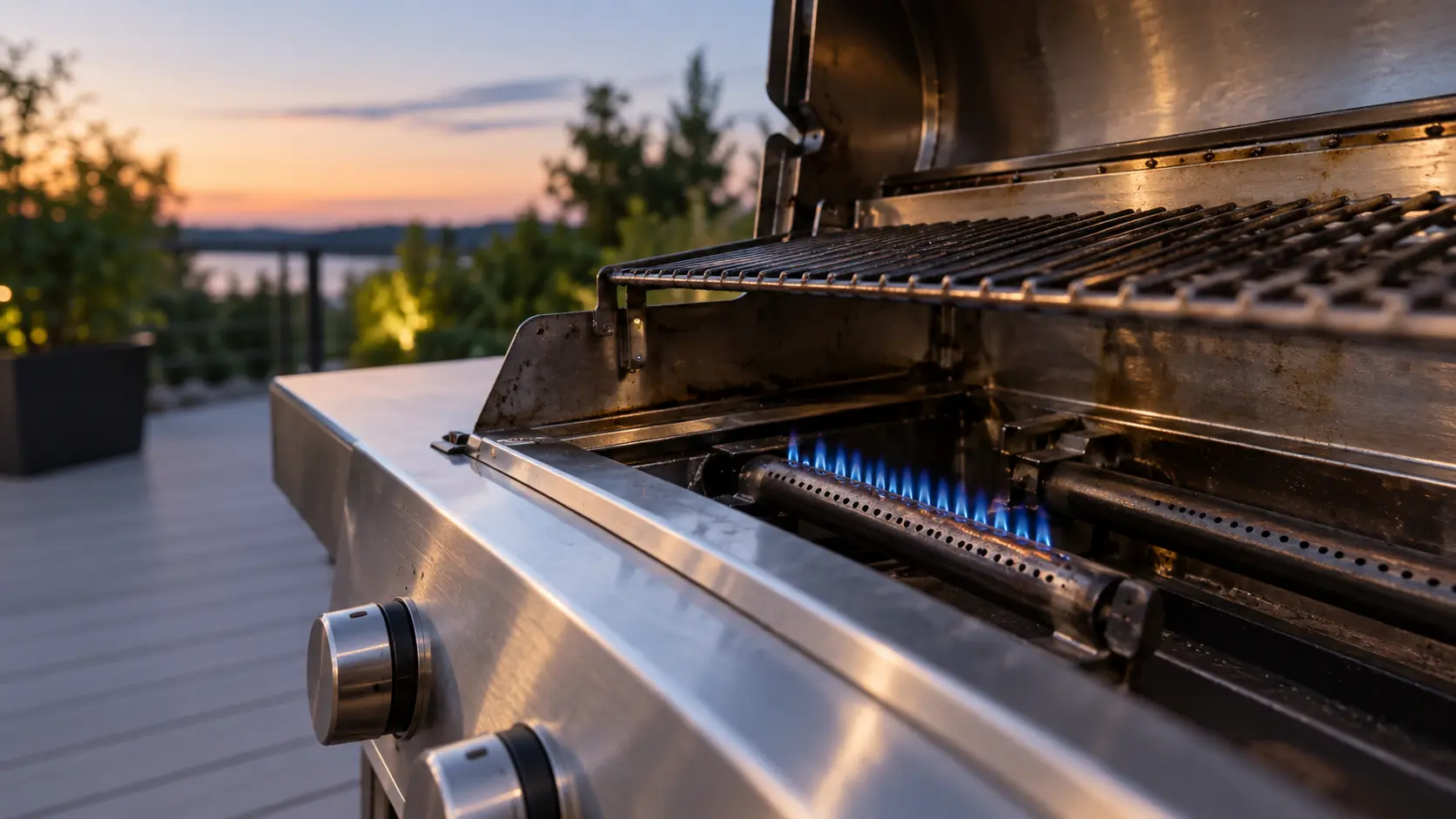
Grill Low Flame: Burners Stuck at a Weak Blue Line
6 causes, cheapest first

Grill Igniter Not Sparking or Clicking Weakly
7 causes, cheapest first

Grill Flare-Ups Every Time Food Hits the Grates
6 causes, cheapest first

Grease Fire in the Grill That Won't Die Down
6 causes, cheapest first

Grill Burners Rusted Through: Holes, Gaps and Ragged Flames
6 causes, cheapest first
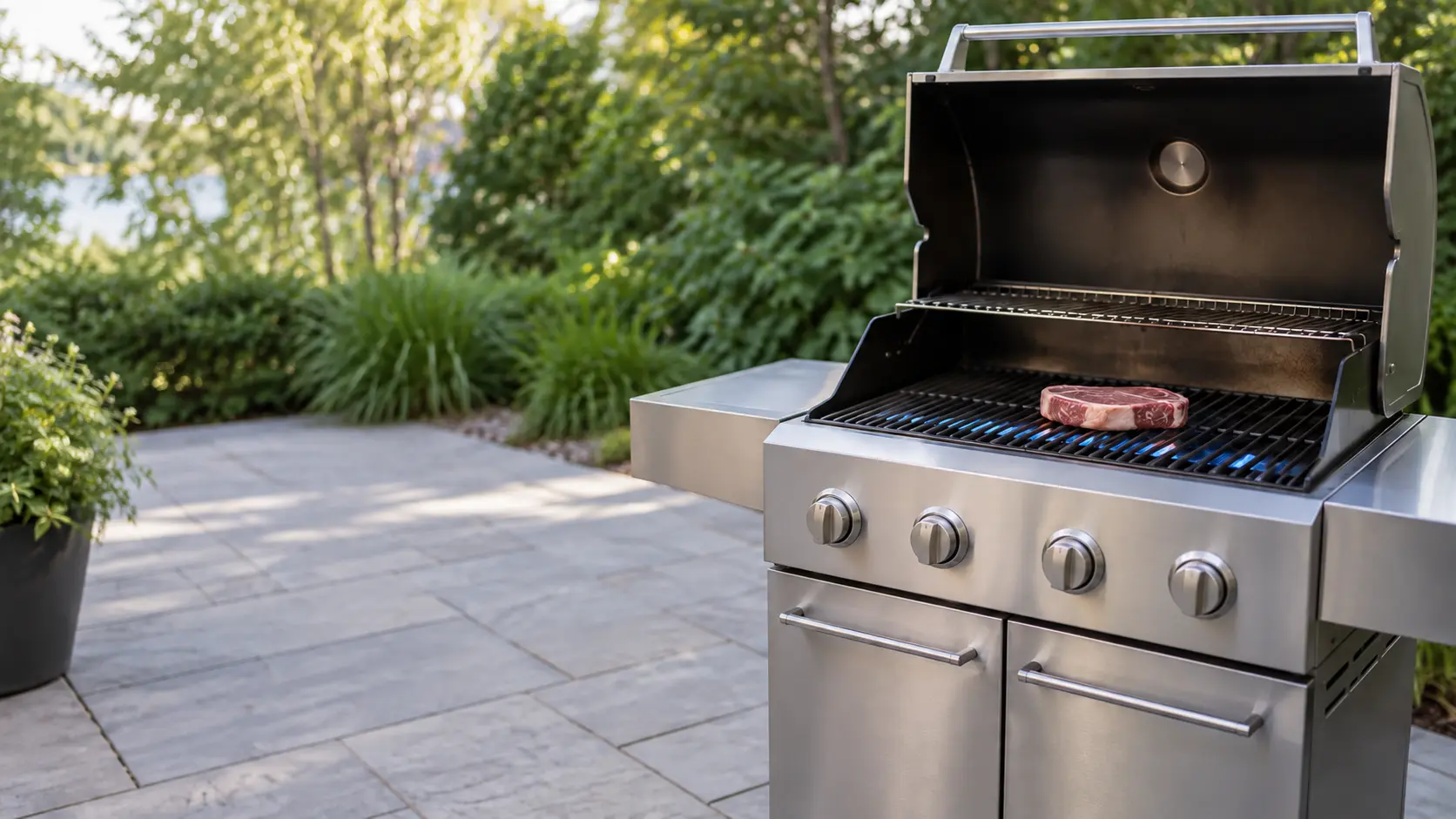
Grill Not Getting Hot Enough to Sear
6 causes, cheapest first
Who builds
a cart.
22 of the makes on this site build a freestanding gas grill. Each mark opens that make's own page.
All 23 brandsFreestanding gas grill repair,
where we come out.
9 metros, each with its own page.
All service areasTampa BayFL · 31 areas
Miami / South FloridaFL · 47 areas
New York MetroNY · 75 areas
HoustonTX · 36 areas
ChicagoIL · 50 areas
Los AngelesCA · 95 areas
San DiegoCA · 31 areas

Questions about
freestanding gas grills.
Why does my cart grill only reach a low heat after I change the tank?
How often should the hose and regulator on a gas grill cart be replaced?
Can a propane cart grill be moved to the house gas line?
Back to your everyday
Is it a freestanding gas grill?
Say so when you book — it changes what the technician brings and how the visit is planned.