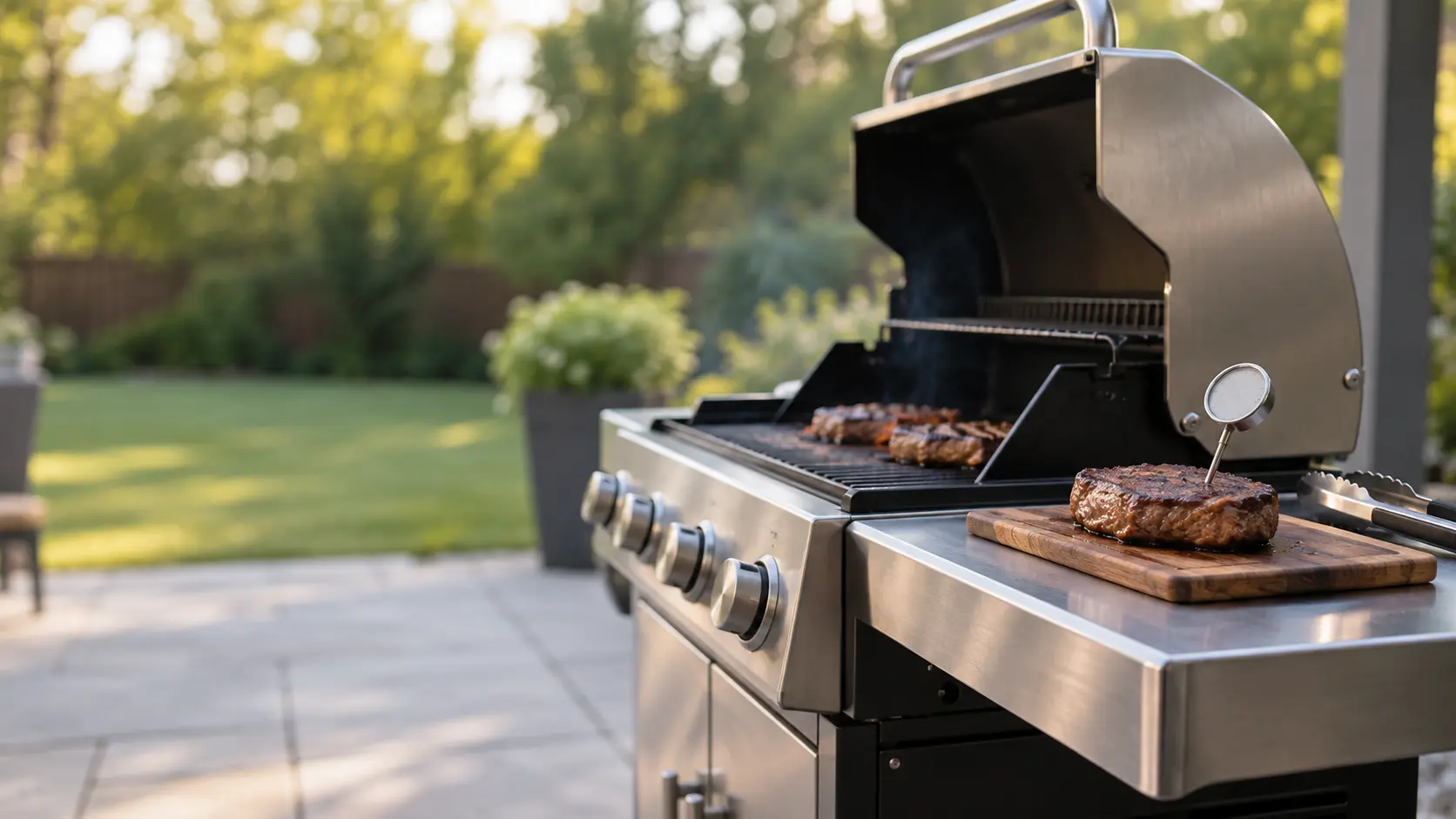


Gas, flame, grease and safe temperatures
Gas, fire and food at the grill
guides.
What to do when you smell gas at the grill, when grease catches in the firebox, when flame shows behind the knobs, and how hot grilled meat and poultry must be before it is safe to serve.
Mon–Sat, 8am–8pm
- Three guides
- Read before you book
- Says where to stop
Book a visit
Three short steps, about a minute.
or call (844) 660-6426
Loading appointment form…
The appointment form couldn’t load. Please try again.
Gas, fire and food at the grill,
guide by guide.
This section is for the moments at the grill when cooking stops and the order of your next few moves matters: fat burning in the firebox long after the burgers came off, a roar and a glow from under the control panel, or a platter of chicken you are no longer sure about. Each guide opens with what to do right away and explains the cause afterward, because that is the order in which you will need it.
All 18 guides


Gas, flame, grease and safe temperatures.
The gas and fire steps are taken from what NFPA, USFA and CPSC publish and from the safety pages at the front of the makers' own manuals. They share one shape: burners off and the gas closed at the tank or the shutoff when it can be reached without going near the flame, no water on burning grease, everyone stepping back, and 911 called from a distance once fire leaves the grill.
The food guide uses only the figures USDA's Food Safety and Inspection Service publishes, and links them on the page: 145°F with a 3-minute rest for steaks, chops and roasts, 160°F for ground meats, 165°F for all poultry, hot food held at 140°F or warmer, and nothing sitting out beyond 2 hours, a limit that shrinks to 1 hour on days hotter than 90°F.
Every guide here also marks where the owner's part ends. Closing a tank valve, lowering a lid from the side, keeping an extinguisher handy and reading a food thermometer are yours; gas fittings, valves, orifices, regulators and a hose that has been through a fire belong to a technician, and a flame is never used to hunt for a leak.
Not sure where to start?The short answerA Grease Fire in the Grill: Burners Off, Gas Closed, Lid Down If It Is Safe, Never Water
A grease fire in a grill is burning fat below the grates that keeps going after the food is off.
The short answerFlashback Behind the Grill Knobs: Flame at the Wrong End of the Burner
Gas grill flashback is flame burning at the front of a burner tube, behind the knobs, instead of at the ports under the grates, usually because spiders or insects blocked the venturi.
The short answerSafe Temperatures for Grilled Food: 145°F, 160°F, 165°F and a Food Thermometer
The safe temperatures for grilled food come from USDA FSIS: beef, pork, veal and lamb steaks, chops and roasts at 145°F with a 3-minute rest, ground meats at 160°F, all poultry at 165°F, fish at 145°F, all read on a food thermometer.
When reading
is not enough.
If the checks in these guides did not settle it, the visit picks up from there, stop by stop.
What repairs cost- 01The gas and the grill, checked first
- 02What failed, and what it costs
- 03Parts on the truck
- 04Lit before we leave
The problems
these answer.
Each has a page of its own, with the causes in the order worth checking.
All 17 problems


Questions about
gas, fire and food at the grill.
What should I do first when grease catches fire in the grill?
What does it mean when flames appear behind the grill knobs?
Where do the food temperatures on these pages come from?
When do I call 911 instead of booking a repair?
The other
sections.
Split by what you are trying to find out rather than by which part of the appliance it concerns.
All guides


Maintenance and prevention

Installation and setup
Start from your question
The four questions most visits start with, each with the guide that answers it.
18 guidesWhere to start Where to startBack to your everyday
Let’s get your grill working again.
Three short steps online, or one call. Tell us what you are seeing and pick a window that works.