Reading the flame with the grates lifted
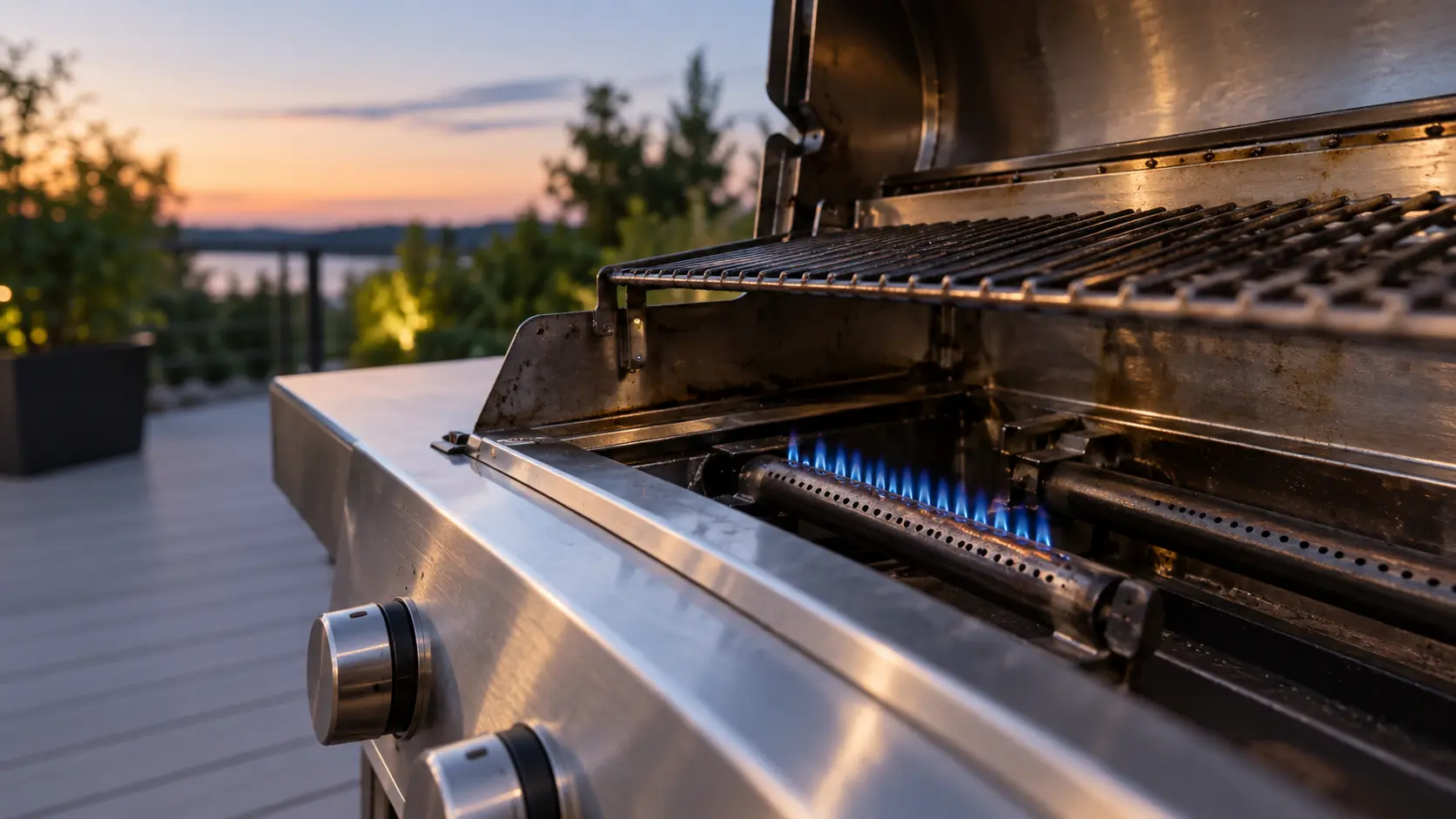
Look at the flame, not the thermometer. With the grill cool, lift out the grates and whatever sits above the burners, light one burner as your manual describes and set it to high, then crouch to the side and look along its length. Napoleon describes a correct flame as dark blue with light blue tips and an occasional flick of yellow.
Lynx separates the harmless from the telling. Dusty air or heavy grease can leave some orange tips on a good burner, but a flame that is yellow through most of its height points to too little air reaching the gas. Compare burners side by side: one yellow burner among blue ones narrows the search to that burner and its tube.
- Short, steady, blue with light tips: normal.
- Soft, tall, yellow or orange, sometimes leaving soot: too little air.
- Lifting off the ports, noisy, hard to light: too much air.
- Small and blue on high, grill never gets hot: too little gas.
Yellow flames with a smell of gas
Blaze puts this combination first in its list of signs that insects have nested in a burner. A blocked tube can push gas back out of the front of the burner, behind the control panel, where it may burn out of sight. Knobs off, cylinder valve or shutoff closed, lid open, and the grill stays off until the burner has been cleaned and inspected.
Source: Napoleon — Built-In Series owner's manual — Correct flame dark blue with light blue tips, occasionally yellow; nests cause soft yellow flame and flashback at the air shutter; air shutter adjustment by a qualified gas installer; valve must enter the burner on reinstall; low flame from pinched hose, lack of gas or regulator low-flow state; preheat 10 to 15 minutes; infrared burner overloaded with grease: off, cool 2 minutes, run high at least 5 minutes; Lynx — Care & Use / Installation manual — Yellow flame means lack of air, orange tips normal with dust or grease, inspect burners for cracks; almost-empty cylinders lack pressure; regulator must not touch the grill; undersized natural gas line; no foil; preheat 10 to 15 minutes; regulator and orifices tuned to the gas on the rating plate; low setting affected by pressure, conversion and gas quality
Why a burner goes short of air
Each burner draws its air through a short tube, the venturi, that fits over a brass orifice at the valve. Napoleon says spiders and insects are drawn to exactly that kind of small enclosed space and that a nest or web can turn the flame soft yellow or orange and start a fire at the air shutter under the control panel. A grill that sat covered through the off-season is the classic case.
The air shutter is a sleeve or plate at the mouth of that tube that sets how much air joins the gas. Napoleon's manual says it is set at the factory, rarely needs moving, and when it does, a qualified gas installer makes the change. Lynx also asks owners to look for cracks in a burner where air can leak in the wrong place.
What an owner can clean, and what stays put
Manuals from Blaze and Napoleon show owners lifting burners out once the grill is cold and the gas is off, clearing the inside of the tube with a long flexible venturi brush and opening blocked ports with a paper clip. Napoleon's warning matters most at the end: when the burner goes back, the valve and orifice must sit inside the burner tube. The orifice and the valve themselves stay in place. Our cleaning guide covers the brush work in detail.
Source: Napoleon — Built-In Series owner's manual — Correct flame dark blue with light blue tips, occasionally yellow; nests cause soft yellow flame and flashback at the air shutter; air shutter adjustment by a qualified gas installer; valve must enter the burner on reinstall; low flame from pinched hose, lack of gas or regulator low-flow state; preheat 10 to 15 minutes; infrared burner overloaded with grease: off, cool 2 minutes, run high at least 5 minutes; Lynx — Care & Use / Installation manual — Yellow flame means lack of air, orange tips normal with dust or grease, inspect burners for cracks; almost-empty cylinders lack pressure; regulator must not touch the grill; undersized natural gas line; no foil; preheat 10 to 15 minutes; regulator and orifices tuned to the gas on the rating plate; low setting affected by pressure, conversion and gas quality

Low blue flames and a grill that stays lukewarm
A flame that is blue but small on high is a fuel problem. Lynx notes that a nearly empty propane cylinder may not hold enough pressure to run the burners on high, and Napoleon adds a pinched supply hose and a regulator in its low-flow state. Weber describes that low-flow state as bypass: the safety device in the regulator cuts flow to about a tenth of normal when the grill was not lit in the right order.
On a natural gas grill the tank drops out of the picture and the pipe takes its place. Both Lynx and Napoleon point to a supply line too small for the grill's demand, which shows up as flames that sag the moment every burner is on high.
- Weigh or lift the cylinder; a light tank is the cheapest answer there is.
- Look along the hose for a kink, a crush point or a spot pressed against a hot panel.
- Make sure the regulator hangs free; Lynx says its diaphragm must not touch the grill body.
- If every knob was open when the tank was turned on, run the reset in our regulator guide.
Preheat time and aluminum foil
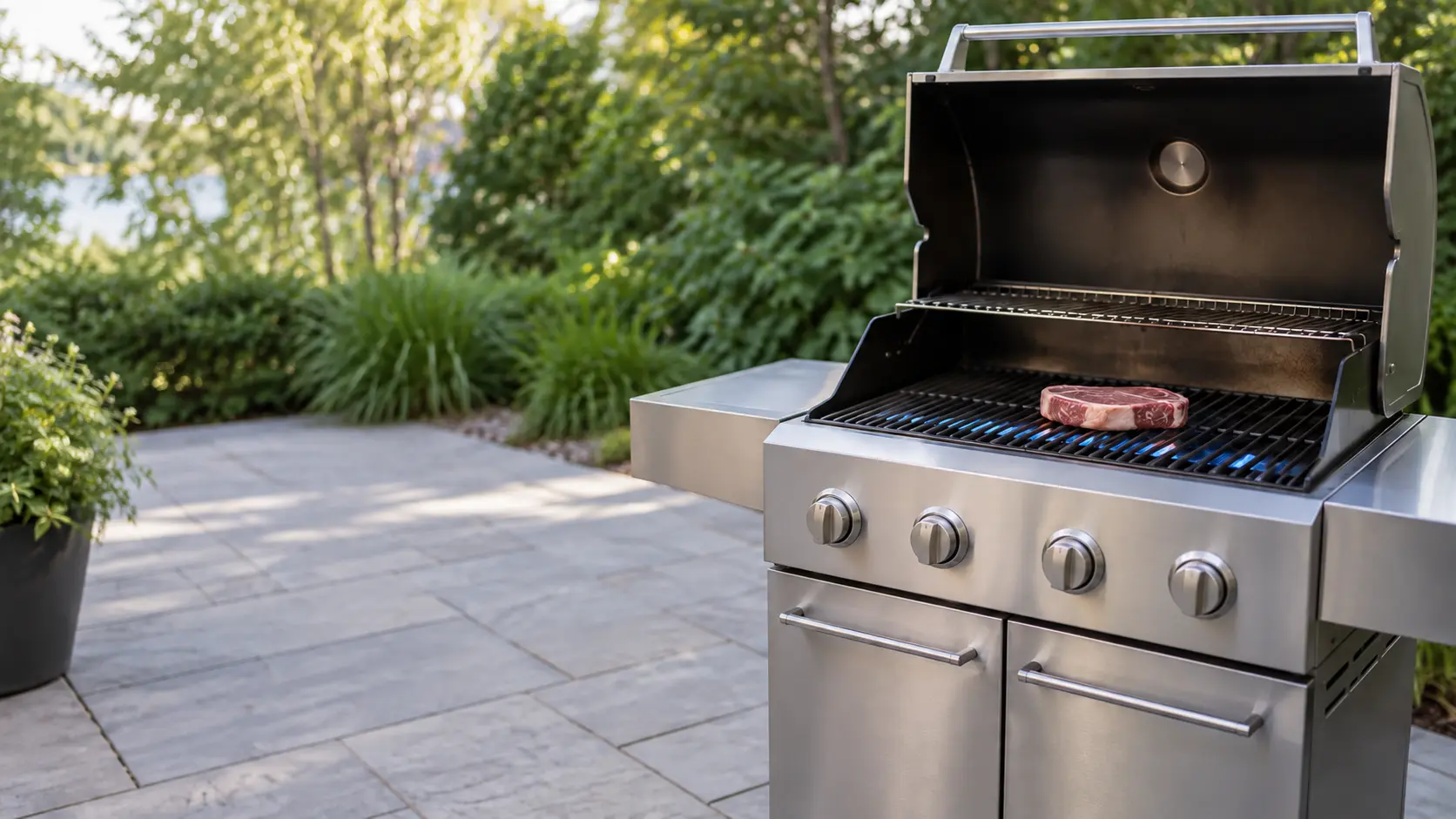
Judge heat only after a full preheat. Lynx and Napoleon both ask for the main burners on high with the hood closed for 10 to 15 minutes, and Weber expects its gas grills to reach about 500 to 550°F in that time. Lynx also says no part of the grill should be lined with aluminum foil, because foil blocks the airflow and causes low heat.
Source: Napoleon — Built-In Series owner's manual — Correct flame dark blue with light blue tips, occasionally yellow; nests cause soft yellow flame and flashback at the air shutter; air shutter adjustment by a qualified gas installer; valve must enter the burner on reinstall; low flame from pinched hose, lack of gas or regulator low-flow state; preheat 10 to 15 minutes; infrared burner overloaded with grease: off, cool 2 minutes, run high at least 5 minutes; Lynx — Care & Use / Installation manual — Yellow flame means lack of air, orange tips normal with dust or grease, inspect burners for cracks; almost-empty cylinders lack pressure; regulator must not touch the grill; undersized natural gas line; no foil; preheat 10 to 15 minutes; regulator and orifices tuned to the gas on the rating plate; low setting affected by pressure, conversion and gas quality; Weber — Why won't your gas grill get hot? Bypass mode — The regulator safety device reduces flow to about 10% or less in bypass; a working grill reaches about 500 to 550°F in 10 to 15 minutes
Flames that changed after a move or a gas conversion
A grill that burned well for years and turned lazy right after moving from propane to natural gas, or the reverse, may be running the wrong orifices or the wrong regulator. Lynx says the regulator and the orifices are tuned for the gas type printed on the rating plate. Compare that plate with the gas you actually burn; if they disagree, stop using the grill and book the conversion rather than living with it.
The low-knob setting can drift after a conversion too. Lynx explains that pressure changes, conversions and even the quality of the gas can leave the low setting too high or too low, so a burner that blows out only on low needs its low adjustment checked by a technician.
An infrared burner that glows in patches
A ceramic sear burner has no tall flame to read; it should glow evenly orange-red across its face. Patches that stay dark usually mean grease clogging part of the ceramic. Napoleon's instruction for a burner overloaded with drippings is to turn it off, let it cool for at least two minutes, relight it and run it on high for at least five minutes until the tiles glow evenly. Cracked ceramic is a replacement.
Source: Lynx — Care & Use / Installation manual — Yellow flame means lack of air, orange tips normal with dust or grease, inspect burners for cracks; almost-empty cylinders lack pressure; regulator must not touch the grill; undersized natural gas line; no foil; preheat 10 to 15 minutes; regulator and orifices tuned to the gas on the rating plate; low setting affected by pressure, conversion and gas quality