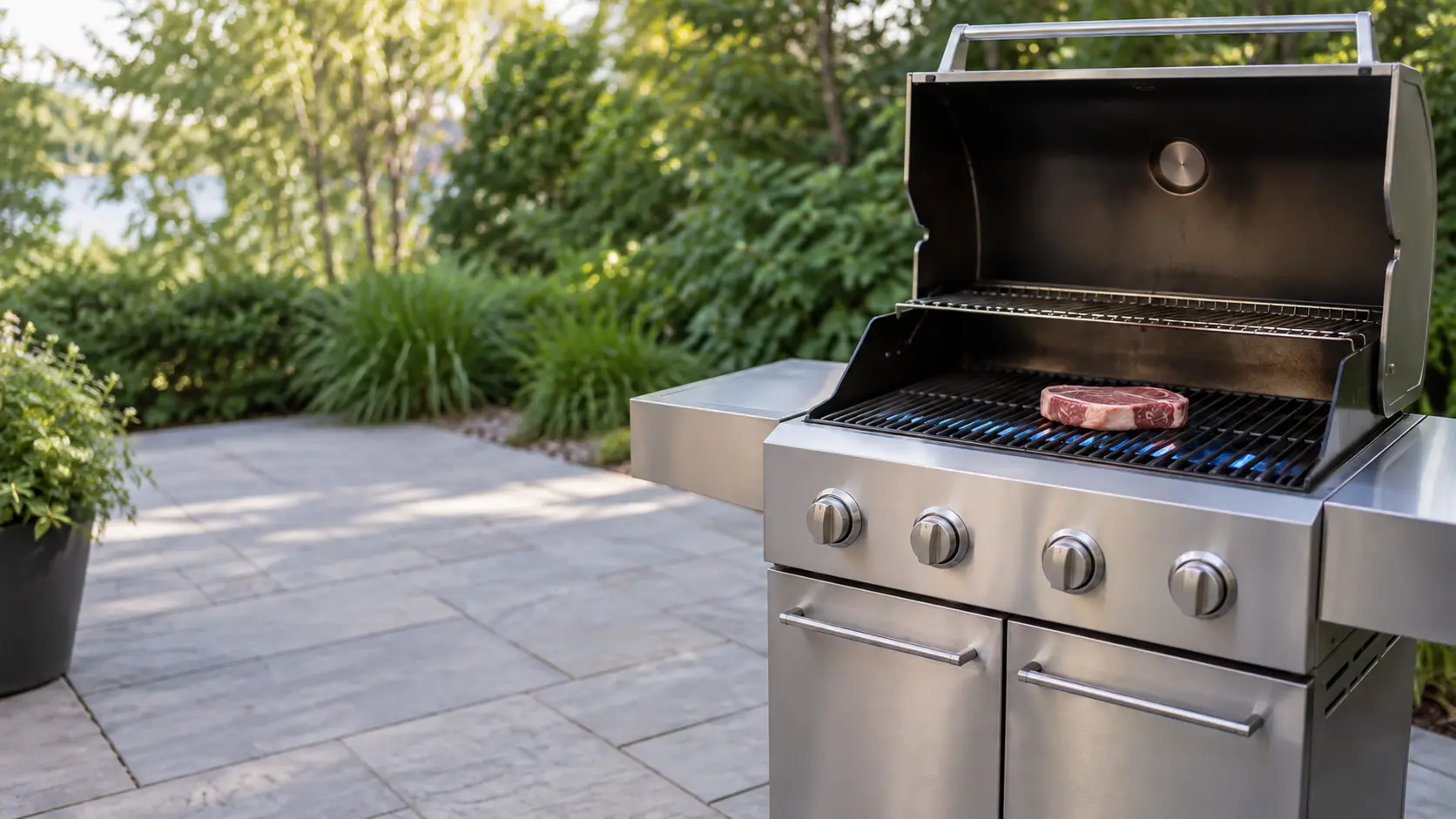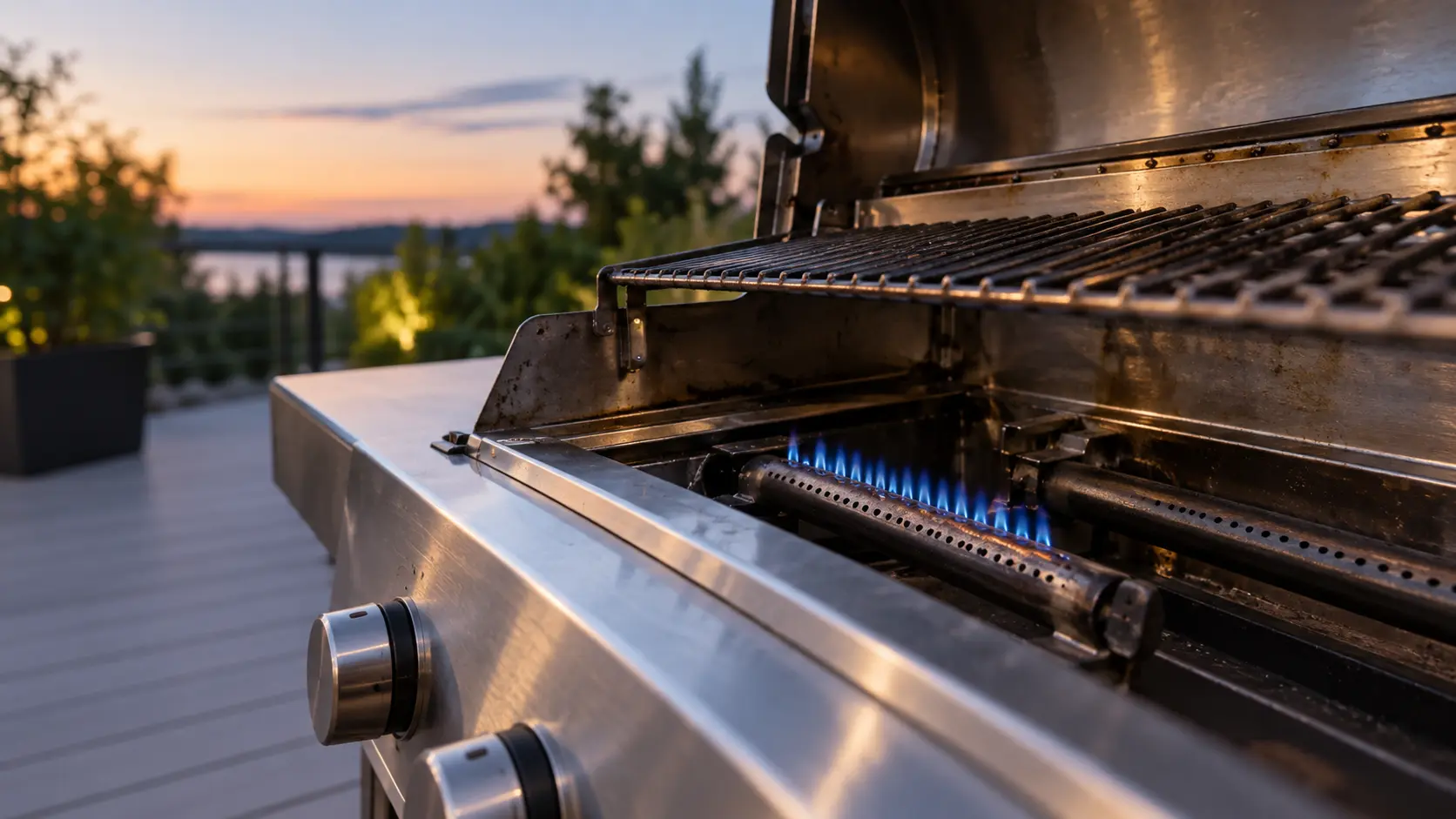


Why does a grill lose heat in cold weather?
A grill loses heat in cold weather because the firebox has to warm colder metal and colder air, and the wind carries that heat away as fast as the burners make it. A summer grill at 85°F outside and a winter grill at 25°F outside burn the same gas but lose heat at very different rates.
Three things change at once when the temperature drops. The steel of the hood, firebox and grates starts colder, so the first ten minutes go into warming the grill itself. Wind pushes through vents and gaps in the firebox and blows air across the burners. And the propane in the cylinder gives up gas more slowly when it is cold.
What is normal and what is not
A cart grill that climbs slowly but gets to a normal cooking heat with a longer preheat on a calm, cold day is behaving. One that stays far below its usual heat with the lid closed even after a long preheat, or that was weak even on a mild day last month, has a cause beyond the weather. The next sections go through the causes in the order owners can check them.
Is the propane tank the problem?
A tank that is low on fuel feels the cold first. Liquid propane has to boil into vapor to feed the burners, and boiling pulls heat out of the tank wall, so a nearly empty cylinder in cold air can cool further and deliver less gas than the grill wants.
- Lift the cylinder or use a scale: the tare weight (TW) stamped on the collar is what yours weighs empty, and a full 20-pound cylinder weighs about 20 pounds more than that.
- Do not pour hot water over the tank or put any heat source near it. Keep it upright, outdoors and in its holder.
- If the grill ran fine until the tank was swapped, the next section matters more than the fuel level.
The regulator's safety device
Many propane regulators carry a flow-limiting device that trips when the valve is opened with the knobs on or opened too fast. The grill then lights, but every flame is small, and the problem is worse on a cold day because the grill has no heat to spare. The exact steps are in resetting the propane regulator; the owner's manual for many models gives the waiting time.
Source: CPSC — Gas grill fact sheet — keep containers upright; never use or store an LP gas container indoors

How much do wind and the lid cost you?
Wind and lid-open time can cost more heat than the outside temperature does. Each lift of the lid in winter drops the cooking chamber by tens of degrees and the grill needs several minutes to win it back, so every extra peek adds cooking time.
- Turn the grill so its back faces the wind, but keep the clearances in clearances around a grill; a windbreak never goes close to the firebox or against a wall of the house.
- Preheat 15 to 20 minutes with the lid closed, not the 10 minutes of summer.
- Use the lid thermometer, not the dial on the knob, and cook on the side that stays hot.
- Plan the cook so the lid opens twice rather than six times.
Cold, wet and snowy days
Snow on the hood melts and refreezes around the vents and can bridge a gap in the firebox. Brush it off with the grill off and cold, and keep a cover on between uses. A grill buried under drifts is also not a grill you light; clear the area first.
Which settings and checks separate weather from a failing part?
A grill that is weak only in the cold is usually weather plus a half-full tank; one that is weak in every season is usually a burner, venturi or regulator problem. This table sorts the signs.
| What you see | Most likely cause | What to do |
|---|---|---|
| Slow to heat, fine once hot, tank half full | Cold metal and wind | Longer preheat, windbreak, fresh tank |
| Every flame small right after a tank swap | Tripped regulator safety device | Reset as the manual describes |
| Yellow, lazy flames in any weather | Blocked burner or venturi | See the flame guide below |
| Heat on one side only | Burner or crossover issue | Book a diagnostic visit |
| Frost on the regulator or hose | Very low tank or a regulator problem | Turn knobs off, close the cylinder valve, call |
When the flame looks wrong
Blue flames with small yellow tips are normal. Mostly yellow, floppy or uneven flames point at spiders, debris or a clogged burner, covered in why the flame burns low or yellow. If the flame is fine and the temperature is not, check the tank and the preheat before blaming parts.
A simple winter routine
A short routine heads off most winter problems: weigh the tank before each cook, clear snow and ice from the hood, vents and the area around the grill, run the burners on high with the lid closed for 15 minutes, and keep a thermometer reading you trust. Write down the lid temperature after 15 minutes on a calm day, then compare it with a windy, 25°F day. The gap between the two is the weather; any gap that persists after a calm warm day is the grill.
When should you book a repair instead of waiting for spring?
Book when a careful restart with a full tank still gives a weak grill, because a failing regulator or valve gets worse, not better, as the cold continues. A grill valve and regulator repair covers the regulator, hose and valve work that owners leave alone.
Not sure which part is failing? A diagnostic visit finds it without guessing, and the checklist in grill checks before booking shows what to note down first: tank level, flame color, which burners are weak and since when. If a grill that does not light at all is your real problem, start with why a grill will not light.