
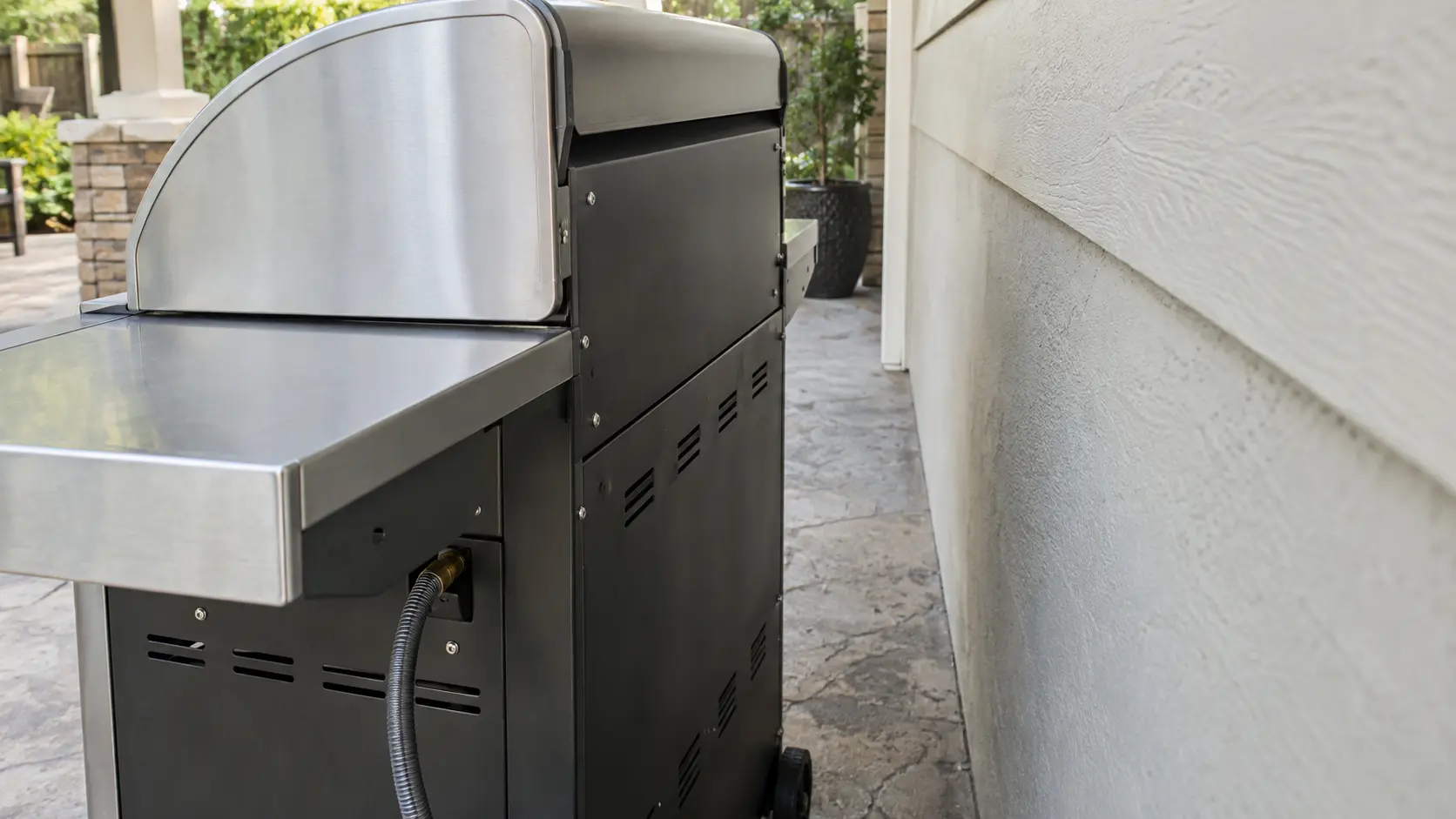

Clearances, gas type and where it may stand
Installation and setup
guides.
Keeping a grill clear of walls, eaves and railings, converting it between propane and natural gas the way the maker allows, and what balconies, decks and rooftops permit.
Mon–Sat, 8am–8pm
- Three guides
- Read before you book
- Says where to stop
Book a visit
Three short steps, about a minute.
or call (844) 660-6426
Loading appointment form…
The appointment form couldn’t load. Please try again.
Installation and setup,
guide by guide.
Where a grill stands and what fuel feeds it are settled once, usually on the day it arrives, and they shape everything after. A cart grill tucked under the eaves or against vinyl siding, a built-in head dropped into a wooden island without the maker's insulated jacket, or a propane grill that someone tried to run on the house gas line will cause trouble no repair visit can fully undo.
All 18 guides

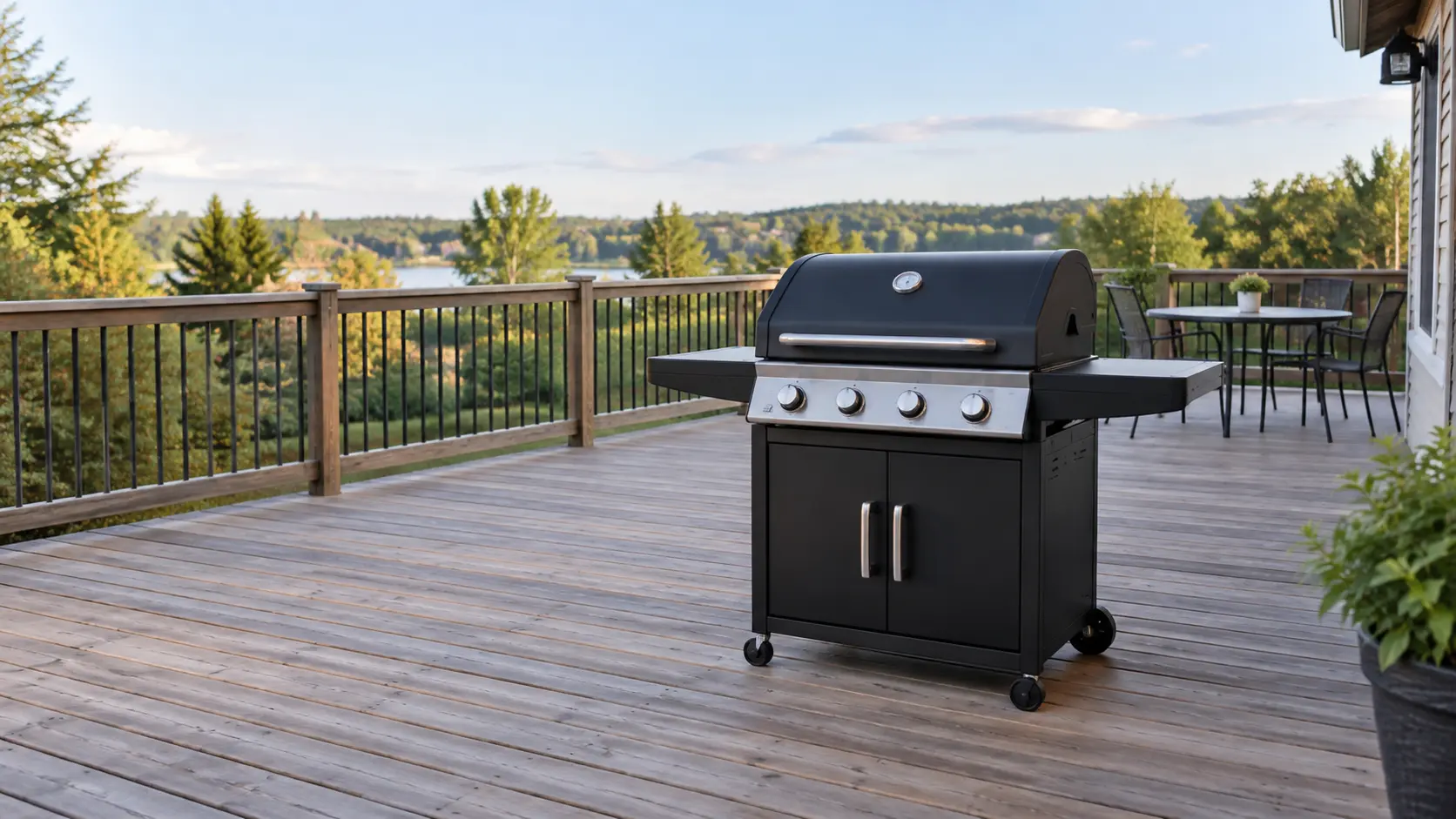
Clearances, gas type and where it may stand.
The guides in this section follow the makers' installation manuals and the safety agencies, and they say which of them each number comes from: the clearance a particular grill needs from anything that burns, the room a built-in head needs behind it for its lid, the distances USFA and CPSC recommend from a house, and what a fire code may say about balconies.
They also describe what the installer and the gas technician do, so you know what to expect and what to ask for. Converting a grill between propane and natural gas, cutting an island opening, running a gas line and fitting a shutoff valve are their jobs, done with the maker's own parts and finished with a leak test, and the guides say so plainly rather than turning those jobs into home projects.
Read them before buying a grill, before moving one, before a remodel of the patio or deck, and before carrying a grill up to an apartment balcony. The owner's part is measuring, reading the rating plate and the manual, checking the local rules and choosing the spot; the rest is booked.
Not sure where to start?The short answerClearances Around a Grill: Siding, Eaves, Railings and the Built-In Cutout
Grill clearance from the house and anything that burns is set by the maker's manual and the safety agencies: Weber keeps a cart grill 24 inches from combustibles, Lynx and Blaze keep built-in heads 18 inches from combustible construction, USFA asks for at least 3 feet from siding, deck rails and eaves, and CPSC advises 10 feet from any building.
The short answerConverting a Grill From Propane to Natural Gas: The Maker's Kit and the Gas Technician
Whether you can convert a propane grill to natural gas depends on the maker: Lynx and Blaze sell conversion parts that a qualified gas technician installs, while Weber calls converting its Spirit grills unsafe.
The short answerGrills on Balconies and Decks: Fire Codes, Building Rules and Clearances
A grill on a balcony is governed by the local fire code, the building's own rules and the maker's manual.
When reading
is not enough.
If the checks in these guides did not settle it, the visit picks up from there, stop by stop.
What repairs cost- 01The gas and the grill, checked first
- 02What failed, and what it costs
- 03Parts on the truck
- 04Lit before we leave
The problems
these answer.
Each has a page of its own, with the causes in the order worth checking.
All 17 problems


Questions about
installation and setup.
How far should a grill be from the house?
Can a propane grill be switched to natural gas?
Who decides whether a grill is allowed on my balcony?
Which setup jobs can a grill owner do alone?
The other
sections.
Split by what you are trying to find out rather than by which part of the appliance it concerns.
All guides


Maintenance and prevention
Gas, fire and food at the grill
Start from your question
The four questions most visits start with, each with the guide that answers it.
18 guidesWhere to start Where to startBack to your everyday
Let’s get your grill working again.
Three short steps online, or one call. Tell us what you are seeing and pick a window that works.