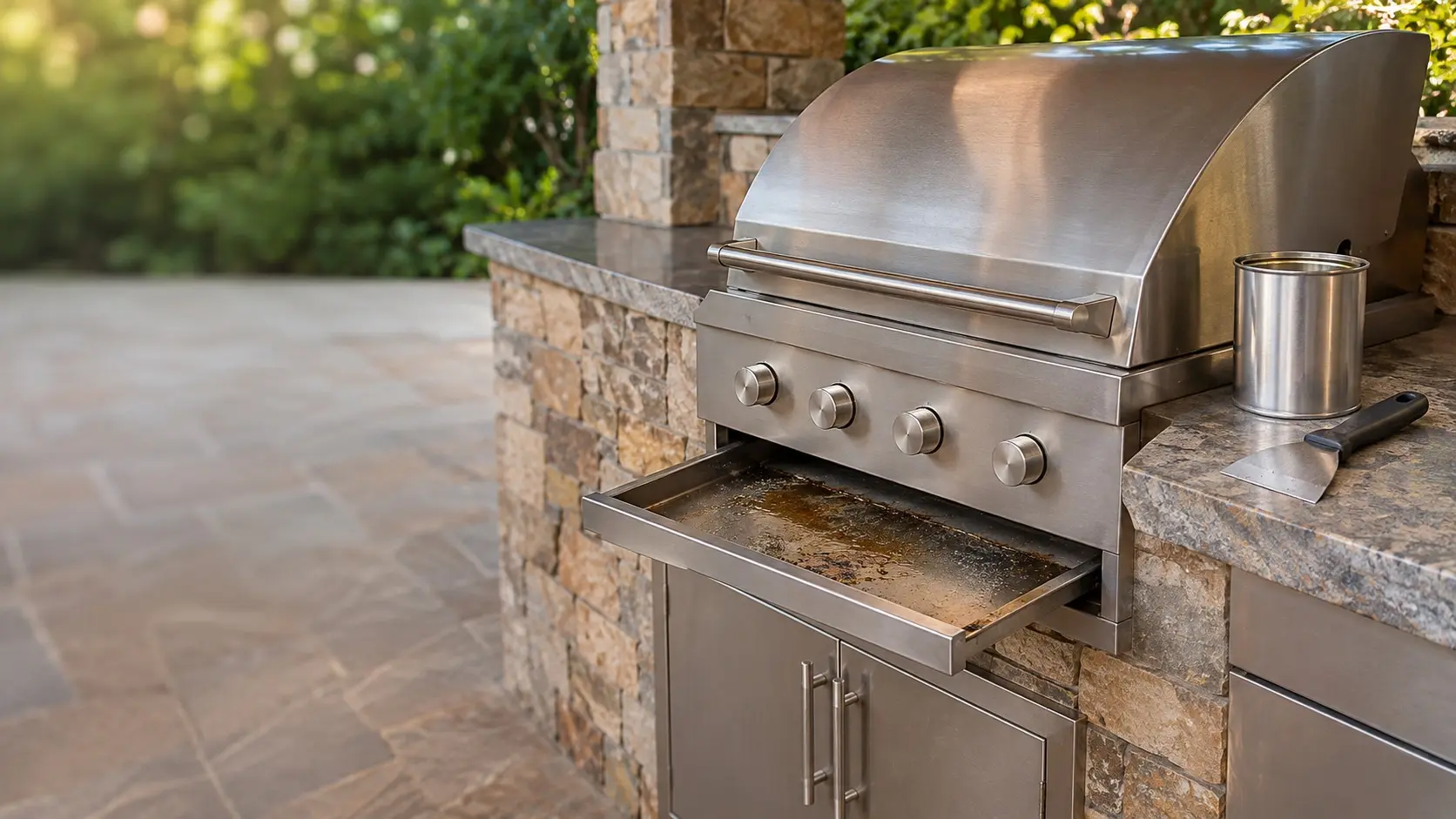


Why does the grease tray matter before a big cook?
The grease tray matters because everything that drips from the food ends up there, and fat that is already hot and already stored under the burners is the fuel for a grease fire. A turkey or a rack of ribs can drip for hours, and a tray that starts the day half full has no room left.
In NFPA's figures the grill had not been cleaned in roughly one-fifth of home grill fires, and NFPA's advice is to remove grease or fat buildup from the grill and the trays below it. The tray, the catch cup and the floor of the firebox are the three places that build up. The guide to a grease fire in the grill covers what to do once a fire starts; this one is about not giving it the fuel.
Source: NFPA — Grilling safety — grill not cleaned in about one-fifth of home grill fires; remove grease from the grill and trays
Where does grease collect on each kind of grill?
Grease collects at the lowest point of the cooking chamber, which differs by type. Knowing where yours drains is half the job.
Cart and built-in gas grills
On a cart grill the fat runs off the heat shields or flavorizer bars to the bottom of the firebox and out through a drain hole into a slide-out tray, often with a disposable cup or pan hanging below. On a built-in grill the tray may sit behind a door in the island, and on some models the drain leads to a pan reached by lifting the grates. Look under the grill first, then in the cabinet. If you are not sure which style you own, built-in or cart grill shows the difference.
Pellet grills
A pellet grill drains the drip tray over the firepot to a pail or cup on the side. The pail takes grease and the firepot area takes ash; both need regular attention on a pellet and hybrid grill, and the routine for the rest of the grill is in caring for a pellet grill.

How do you empty and scrape the tray?
Empty the tray only when the grill and the fat are fully cold, with the gas off. Warm fat splashes and a tray that looks cool can still hold hot liquid in the middle.
- Turn every burner off and close the cylinder valve or gas supply, then wait until the grill is cold to the touch.
- Slide the tray out slowly, level, and set it on a flat surface covered with newspaper or cardboard.
- Tip liquid fat into a metal can with a lid, not down a drain or into the yard; let it set and put it in the trash.
- Scrape the solid fat with a plastic or wooden scraper into the same can.
- Wash the tray and cup in hot soapy water, rinse, dry and refit them fully seated.
- Wipe the hood and burner box floor with a rag or scraper where fat has built up.
What not to use
Do not run a hose into a gas grill's body, and do not spray oven cleaner on or near burners, wiring or the igniter. Wire brushes shed bristles that stick to food, so a scraper and a cloth are the safer tool.
Which liners and pans are safe?
Use the disposable pan or liner that your maker sells for that tray, because the size and fit are what keep fat from running behind it. Foil over a tray is the common shortcut, and some owner's manuals warn against it because it can trap heat and block the drain; check yours.
| Part | How often | What to do |
|---|---|---|
| Disposable cup or pan | Every few cooks, or when a third full | Replace it |
| Slide-out tray | Before a long cook, then monthly in season | Scrape, wash, dry |
| Pellet grill pail | When the grease nears the rim | Empty and line as the manual says |
| Hood and firebox floor | Every few weeks | Scrape while cold |
A pre-cookout routine
Ten minutes the day before is enough. With the grill cold, empty and wash the tray and cup, scrape the burner box floor where you can reach it, then run the grill on high with the lid closed for 15 minutes to burn off what the scraper missed. Wipe the handle and knobs so the grill is clean to use. If a lot of smoke rises during that burn, there was more old fat inside than you could see, and it is better to find out on a quiet day than in the middle of a turkey.
How often should you do it, and when is a visit better?
Do it before every long cook, after any cook that dripped a lot, and at least once a month in grilling season. A tray with a skin of hard black fat, a strong rancid smell or a fire in the past is past the owner's job; a grill cleaning and safety inspection goes through the burner box, hose and heat shields too.
The freestanding gas grill page lists what else a technician checks. If you keep getting flare-ups even with a clean tray, the cause may be the flavorizer bars or the burner itself, covered in heat shields, flavorizer bars and briquettes.


