


Start with what you own
Grill
types,
told apart.
Four kinds of grill, four ways of making heat. A built-in grill head burns gas in tube or cast burners under the grate and lives in a counter cutout; a cart grill does the same on wheels, usually off a propane tank; an infrared grill heats a ceramic or mesh surface until it glows and cooks with radiant heat; and a pellet or hybrid grill burns wood pellets fed by an auger and a fan, or adds charcoal to gas. Naming yours in the booking tells the technician which burners, which controls and which gas to expect.
Mon–Sat, 8am–8pm
- 4 types
- Serviced in place
- What each one costs
Book a visit
Three short steps, about a minute.
or call (844) 660-6426
Loading appointment form…
The appointment form couldn’t load. Please try again.
Four types,
each its own job.
Each one is built, reached and repaired differently. Open yours for what fails on it and what the work involves.
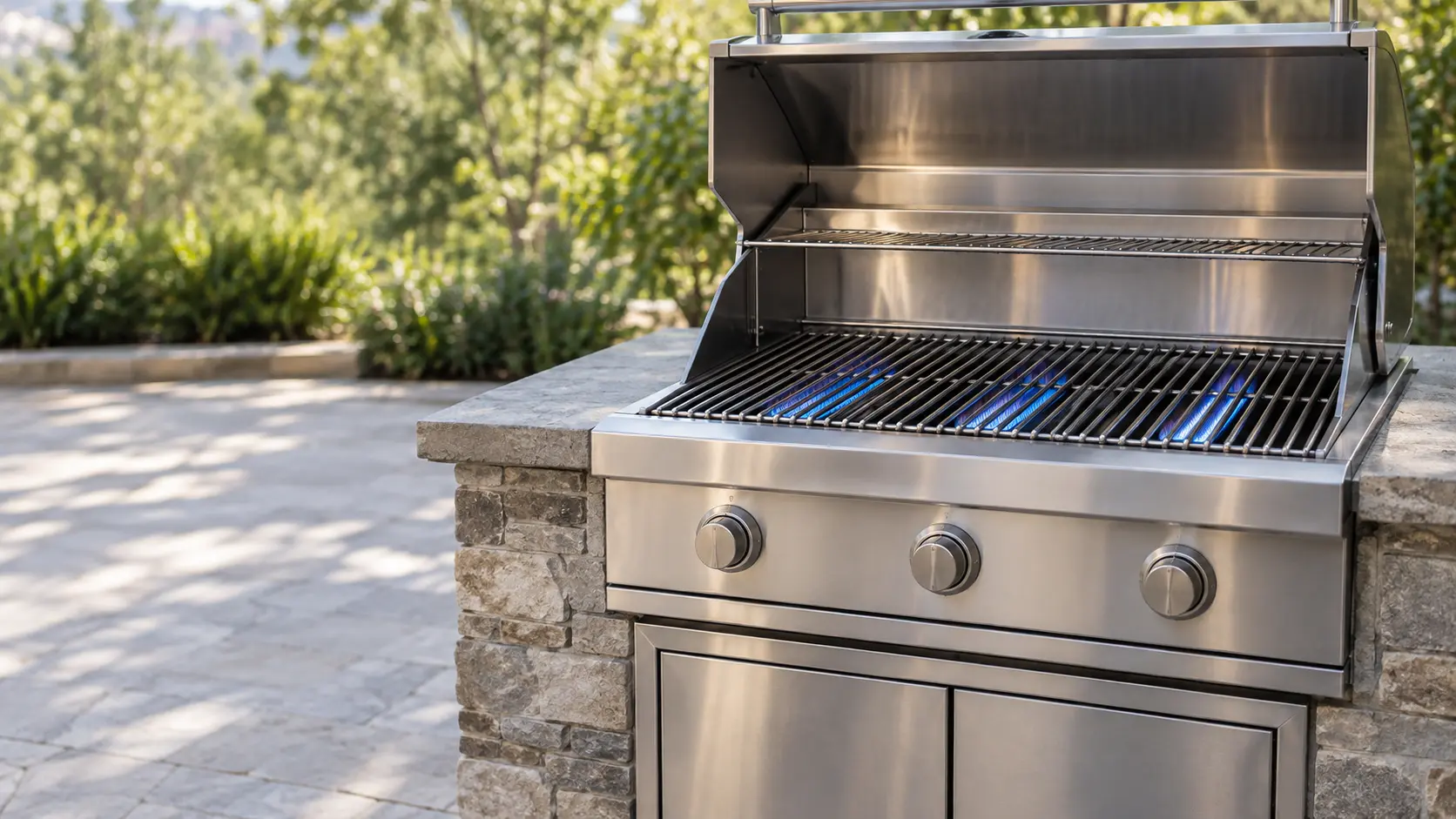
Built-in gas grill
A stainless grill head dropped into a masonry or steel island, fed by a tank or the house gas line, with its burners, knobs and lid working in open weather.

Freestanding gas grill
A gas grill on its own cart with wheels, side shelves and a propane tank below, or a hose to a house gas outlet, rolled into place on the patio.

Infrared grill
Grills that cook with radiant heat: ceramic or mesh infrared burners, sear stations beside the main burners, and radiant glass or emitter plates over a gas flame.
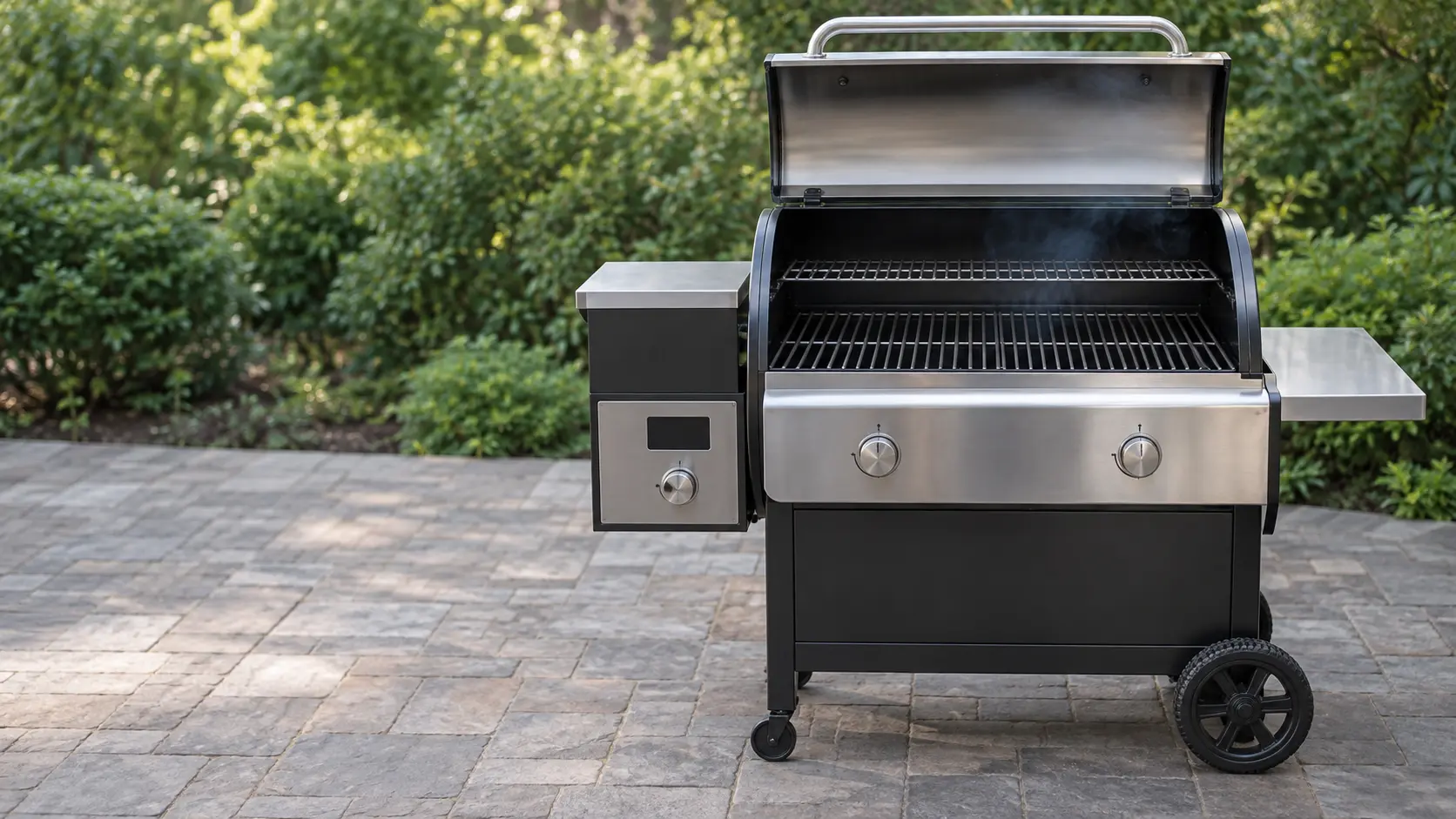
Pellet and hybrid grill
Pellet grills with a hopper, auger and electric igniter under a digital controller, and hybrids that burn gas, charcoal or wood in the same firebox.
Not sure which you have?Start from what it is doing
If the grill on your patio does not obviously match one of these, work from the symptom instead. It reaches the same answer from the other end.
17 problemsIn order of costWhat to check first Go to the problemsWhich one
is yours?
One look at the grill usually settles it. The first sign of each type is on the right; its page has the rest, and what that type means for a repair.
Built-in or cartBuilt-inBuilt-in gas grill
The grill has no cart and no wheels: its firebox sits down in a cutout in a stone, stucco or steel counter, and only the hood and the knob panel stand above it.
CartFreestanding gas grill
The grill rolls: it stands on a cart with casters or wheels, and it can be pushed away from the wall to reach its back.
InfraredInfrared grill
Under the grate you see a flat plate that glows orange across its whole face instead of a row of small blue flames along a tube.
PelletPellet and hybrid grill
A hopper stands on one side of the cooking box with a lid over it, and a small motor housing sits where the hopper meets the box.
What a repair
usually costs.
Weigh the repair against what a new grill of the same class would really cost you, delivered, set in place, connected to its gas and checked, not only its catalog price. A built-in head also brings the question of whether a new one fits the old cutout, which often decides the matter in favor of repair. Burners, igniters, heat shields, a regulator and a cleaning are small next to a new grill, and a valve or a controller is usually still worth it. Where it tips the other way is a firebox or hood rotted through, or a grill so old its parts are no longer made; then the technician writes out both sums and the call is yours.
| Repair | Relative cost | Notes |
|---|---|---|
| Venturi cleared, burner ports opened, or rusted main burners replaced | low to moderate | Brushing webs out of the venturi necks and opening the ports is the light end. One or two new burners sit in the middle, and a full set of cast or stainless burners for a wide built-in head, fitted and each flame set, is the fuller job. |
| Spark module, piezo button, electrode, ignition wire or hot-surface igniter | low | A new battery module or a single electrode with its gap set costs little beyond the visit. Several electrodes and wires run behind the panel, or a hot-surface igniter on a premium head, add parts and time. |
| Burner valve, knob, regulator, hose or orifices for a gas conversion | low to moderate | A new regulator and hose on a cart grill, leak-checked, sits low here. A burner valve replaced behind the panel is a step up, and a full propane-to-natural-gas conversion with every orifice changed is the larger job. |
| Ceramic infrared tile, mesh or glass emitter, or a complete sear burner | moderate | Correcting a sear burner's ignition and burning off light fouling is the smaller end. A new ceramic tile or screen is a step higher, and a complete infrared burner assembly from the maker is the dearest part of this work. |
| Rotisserie motor, spit, bushing, or the rear infrared back burner | low to moderate | A bushing or a straight new spit is modest. A replacement rotisserie motor sits in the middle, and a back burner with its igniter and valve, fitted along the rear wall of the hood, is the fuller job. |
| Flavorizer bars, heat plates, briquettes or radiants, cooking grates and grease tray | low to moderate | A few heat shields on a small grill are the light end. A full set of shields and grates for a wide head, or ceramic radiants with a new grease tray and the ledges they rest on straightened, moves the job up. |
| Auger clearing, auger motor, hot rod, combustion fan, probe or controller on a pellet grill | moderate | Clearing a jammed auger tube and a new probe or hot rod sit low in this band. An auger motor or a combustion fan is a step higher, and a new controller for a connected pellet grill is the dearest part here. |
| Hood lights, knob lights, transformer, power supply, switches and harness | low to moderate | A lamp, a lens or a sealed connector is modest. A transformer or a power supply is a step up, and a harness replaced where heat or rodents damaged it along the firebox takes the most time. |
| Deep cleaning of the firebox, burners and grease path, with a gas and spark safety check | lowest | A full take-down, cleaning and leak check of one grill is the smallest job on this list. Any burner, hose or igniter found failing during it is priced as its own repair, before any work is done. |

Questions about
the types.
Which grills does this site cover?
Is an infrared burner fixed the same way as a tube burner?
Can a pellet grill be repaired like a gas grill?
What about my grill helps the technician most?
Back to your everyday
Let’s get your grill working again.
Three short steps online, or one call. Tell us what you are seeing and pick a window that works.