


Grill
Uneven Heat: Hot Spots and Cold Corners on the Grates
Grill uneven heat shows as steaks charred on the left and pale on the right, a cold front edge, or one corner that never browns while the rest of the grates run hot.
Mon–Sat, 8am–8pm
- 5 checks before you book
- 5 questions that narrow it
- 6 causes, cheapest first
Book a visit
Three short steps, about a minute.
or call (844) 660-6426
Loading appointment form…
The appointment form couldn’t load. Please try again.
What it
usually means.
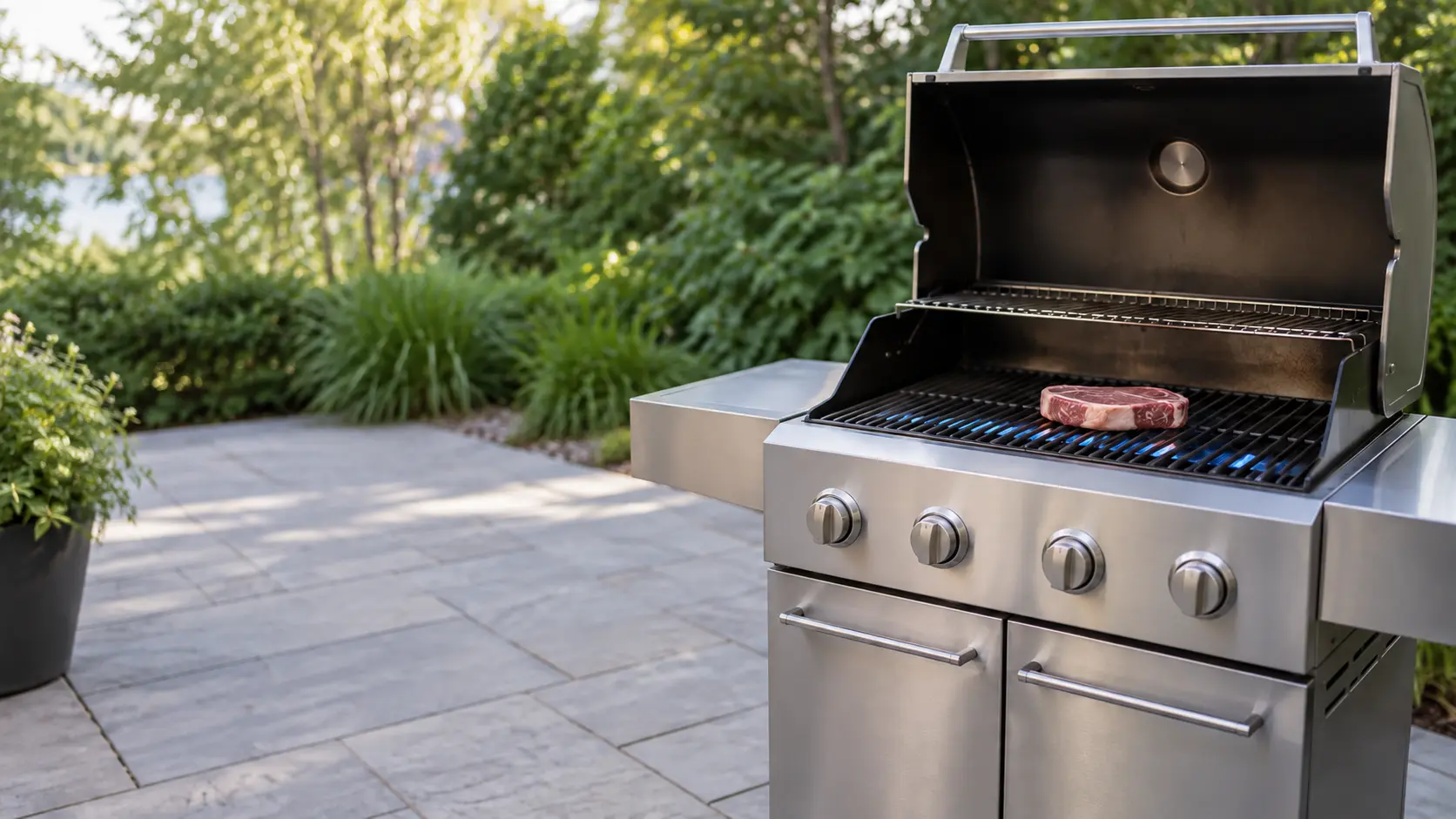
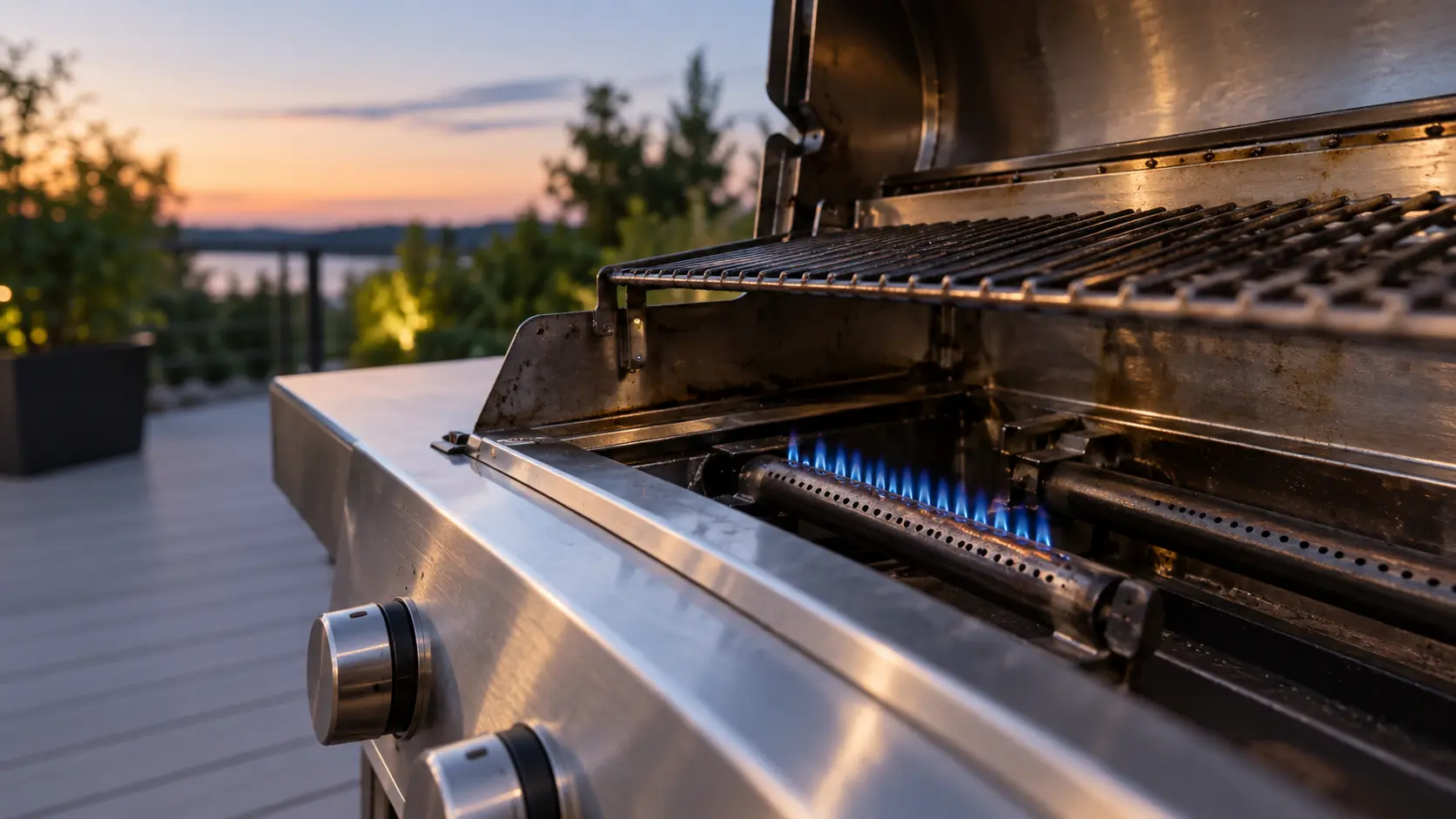
Some unevenness is designed in: most grills run hotter at the back, where rising heat gathers under the lid, and cooler at the front by the knobs. Beyond that, even heat depends on every burner making the same flame and on the layer between burners and food spreading it. That layer is the heat shields, called flavorizer bars by some makers, or ceramic briquettes, lava rock or radiant plates on others. When a shield is warped, rusted through or missing, the flame beneath it strikes the grates directly and makes a hot stripe; when briquettes are soaked with fat, they flare in one spot. A burner with half its ports closed or a web in its venturi makes a short flame at one end. Wind is the outside cause: a breeze across a cart grill with the lid up strips heat from the upwind side. On infrared grills, a cracked ceramic tile or a clogged emitter screen leaves a dead patch in an otherwise glowing field. A bread test, slices laid across the grates for a minute on medium, maps the pattern clearly.
 The 6 causes, cheapest first
Answer these first
Is the cool area always in the same place, or does it move with the wind?
Do all burners show the same flame height when viewed through the grates?
Are any heat shields, bars or briquettes cracked, bent or missing?
Is it a gas, infrared or pellet grill?
Does a bread test show a stripe, a corner or a fade from back to front?
Check these
before you book.
Grill uneven heat: 5 checks, and none of them costs anything.
Lay slices of bread across the grates on medium for a minute and photograph the pattern.
Cook with the lid closed, and turn the grill so the wind meets its back or side.
Once cold, lift the grates and look at every shield and briquette for gaps, warps and heavy crust.
Also worth checking
- Watch each burner's flame through the grates; one short or ragged flame points to that burner.
- On an infrared grill, look for dark patches in the glow once it has preheated.
How soon does it need a visit?
Uneven heat is a cooking problem, not a safety one, and an ordinary booking suits it. If one burner also shows yellow flame or flame near the knobs, see those pages first.
The causes,
cheapest first.
6 things grill uneven heat: hot spots and cold corners on the grates turns out to be, from wind across the grill to infrared tile cracked or emitter clogged.
The cost guide-
01 no repair
Wind across the grill
A steady breeze carries heat off the upwind side, more so with the lid open. Turning the grill or setting a solid screen upwind evens it out.
-
02 no repair
The normal difference from back to front
Most grills run cooler at the front. Searing at the back and resting food at the front is how they are meant to be used.
-
03 low
Heat shields warped, rusted or missing
A shield with a hole, or one that has sagged, lets flame reach the grates in a line. New shields made for the model restore the spread.
-
04 low
Briquettes or radiants soaked with grease
Saturated briquettes flare in patches and block heat elsewhere. They are replaced as a set, not scrubbed.
-
05 low to moderate
One burner with blocked ports or a web
A burner that only makes flame along half its length leaves a cold stripe above the other half. It is cleaned or replaced.
-
06 moderate
Infrared tile cracked or emitter clogged
A cracked ceramic face or a screen closed by grease leaves a dark patch in the glow. The infrared burner is repaired or swapped.
What else
it could be.
Most often confused with grill not getting hot enough to sear, then grill low flame: burners stuck at a weak blue line.
All problemsCodes that come with it
Knob LEDs: 9 lit at HI, 1 lit at LOWAlfresco · Mode, not a failureBurner N failed to stabilizeLynx · Flame and gas flowBurner N temperature not steadyLynx · Temperature and probesCalibration failedLynx · Temperature and probesKnob bezel yellow, orange or redTwin Eagles · Temperature and probes
Also related

The makes
it happens on.
23 makes on this site; grill uneven heat: hot spots and cold corners on the grates can show up on any of them. Each mark opens that make's own page.
All 23 brandsGrill Uneven Heat: Hot Spots and Cold Corners on the Grates,
where we come out.
9 metros, each with its own page.
All service areasTampa BayFL · 31 areas
Miami / South FloridaFL · 47 areas
New York MetroNY · 75 areas
HoustonTX · 36 areas
ChicagoIL · 50 areas
Los AngelesCA · 95 areas
San DiegoCA · 31 areas

Questions about
grill uneven heat: hot spots and cold corners on the grates.
How can we find hot spots on the grill without wasting a steak?
Do all gas grills run hotter at the back?
Should flavorizer bars be flipped over to even the heat?
Can the cooking grates themselves cause uneven heat?
Back to your everyday
Still seeing grill uneven heat: hot spots and cold corners on the grates?
Book with what you checked above — 5 answers save the technician the first part of the visit.