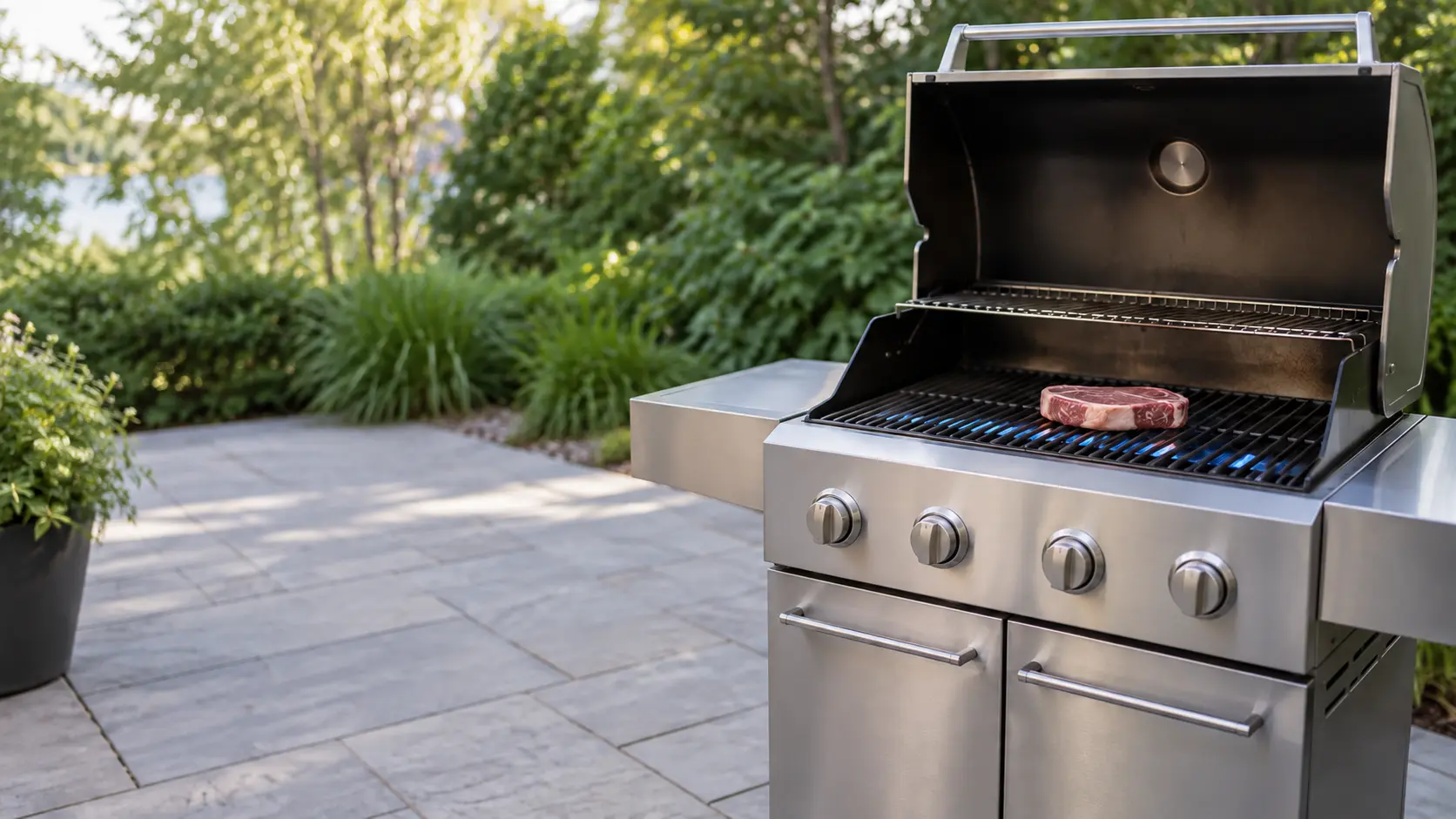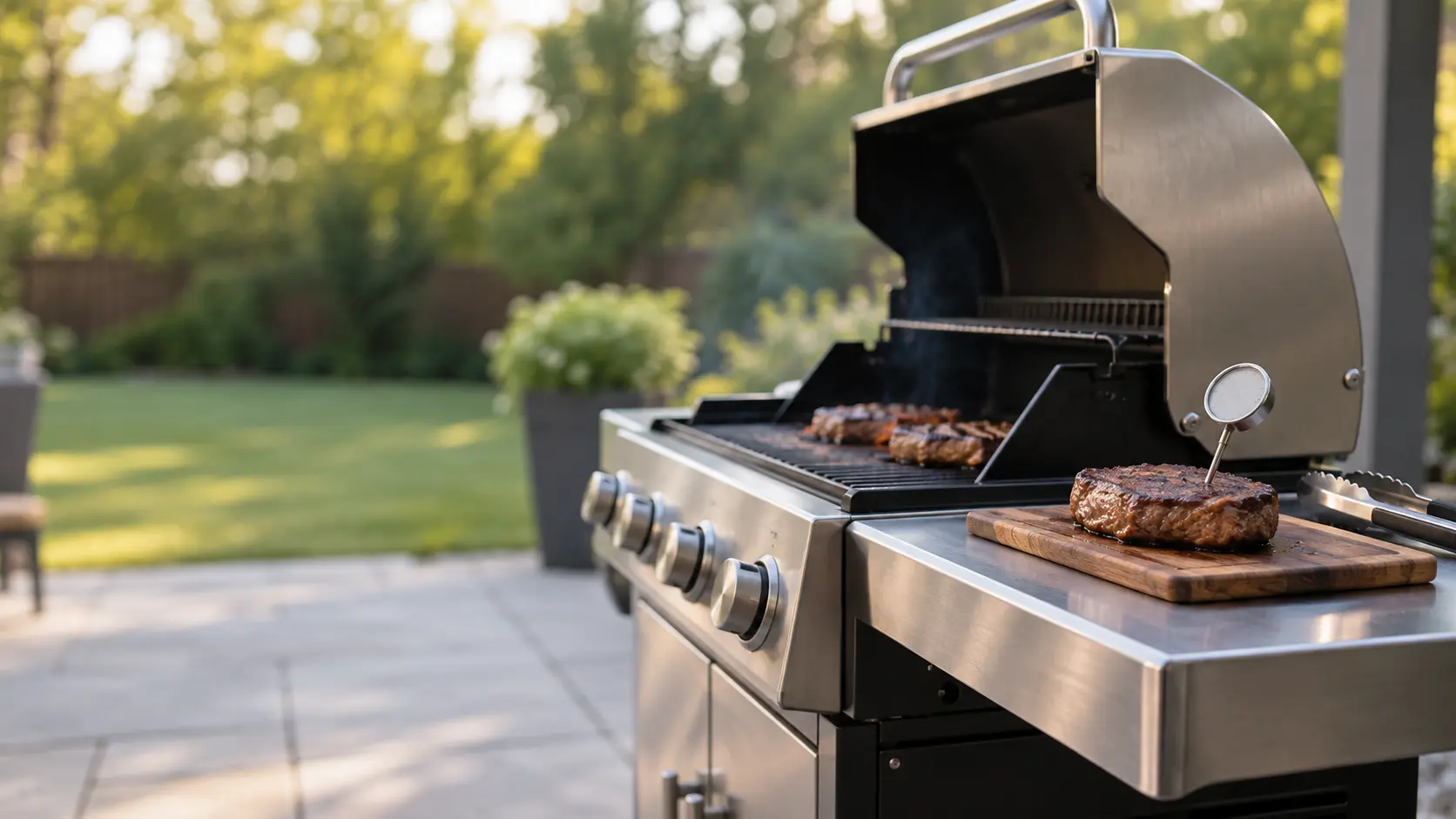

The safe temperatures for grilled food, from USDA
USDA's Food Safety and Inspection Service publishes one chart of safe minimum internal temperatures, and it asks for each to be measured with a food thermometer before the food comes off the heat. You may cook past them for taste; you should not stop short of them. The rest time on whole cuts is part of the rule, not a garnish: the meat sits off the grill for at least 3 minutes before it is carved or eaten.
| Food | Minimum internal temperature | Rest |
|---|---|---|
| Steaks, chops and roasts of beef, pork, veal or lamb | 145°F | At least 3 minutes |
| Ground beef, pork, veal and lamb, including burgers | 160°F | None |
| All poultry: breasts, whole birds, legs, thighs, wings, ground | 165°F | None |
| Fish and shellfish | 145°F | None |
| Fresh or smoked ham, uncooked | 145°F | At least 3 minutes |
| Fully cooked ham, reheated | 140°F if packaged in a USDA-inspected plant, otherwise 165°F | None |
| Hot dogs and other fully cooked meats, reheated | 165°F or until steaming hot | None |
Why the outside of the meat misleads
FSIS points out that meat and poultry cooked on a grill brown very fast on the outside, which is exactly why it wants a thermometer used. A burger over a hot sear burner can be dark and crusted with a middle still well short of 160°F, while a chicken thigh cooked slowly over indirect heat can look pale and be fully done.
Source: USDA FSIS — Safe Minimum Internal Temperature Chart — 145°F plus 3-minute rest for beef, pork, veal and lamb steaks, chops and roasts and for uncooked ham; 160°F ground meats; 165°F all poultry, leftovers and casseroles; 145°F fish and shellfish; reheat cooked ham to 140°F or 165°F; measure with a food thermometer before removing from the heat
Reading the thermometer at the grill
The dial on the grill lid measures the air under the lid, and a pellet grill's controller reports the temperature of its cooking chamber. Neither says anything about the inside of a chicken breast. The number that counts comes from a food thermometer pushed into the meat itself, before it leaves the heat.
Read more than one piece when a grill is loaded, because heat is rarely even from one end of a grate to the other. The pieces over the hottest burner finish first and the ones near a cooler edge or a burner turned low lag behind, so the last piece checked is the one that decides when the platter is ready.
When the grill itself is the problem
If thighs on the left of the grate keep reading well below those on the right, or a cook that used to take twenty minutes now takes forty, the grill is telling you something. A burner partly blocked by rust or a nest, a tired regulator or a pellet controller that has drifted can all leave one zone cool. Cook to the thermometer in the meantime, and book a look at the grill rather than trusting the lid dial.
Source: USDA FSIS — Safe Minimum Internal Temperature Chart — 145°F plus 3-minute rest for beef, pork, veal and lamb steaks, chops and roasts and for uncooked ham; 160°F ground meats; 165°F all poultry, leftovers and casseroles; 145°F fish and shellfish; reheat cooked ham to 140°F or 165°F; measure with a food thermometer before removing from the heat

Before the food reaches the grate
FSIS asks for meat and poultry to be thawed completely before grilling so it cooks evenly, in the refrigerator or in sealed packages in cold water; microwave thawing is fine only if the food goes on the grill right away. Marinating happens in the refrigerator, not on the counter or the side shelf. If some marinade is wanted as a sauce, set that portion aside before raw meat goes into it, and boil any used marinade for a few minutes before brushing it on.
Cold food stays at 40°F or below. Keep meat refrigerated until it is going straight onto the grill, and if a cooler carries it out, keep the cooler in the shade, open it as little as possible and pack drinks in a separate one from the perishables.
- Only take out the meat that is about to go on the grill.
- Store raw meat and poultry sealed at the bottom of a cooler, under other food.
- If poultry juice leaks onto other meat, cook that meat to 165°F.
- Use a clean platter and clean utensils for cooked food, never the ones that held it raw.
Source: USDA FSIS — Grilling and Food Safety — Grilled meat browns fast outside, use a thermometer; thaw fully; marinate in the refrigerator and boil used marinade; keep cold food at 40°F or below; poultry juice on other meat means cooking it to 165°F; never partially grill and finish later; keep hot food at 140°F or warmer; discard after 2 hours or 1 hour above 90°F; reheat hot dogs to 165°F
At the grill and after it
FSIS is firm on one habit: never partially grill meat or poultry and finish cooking it later. Precooking in the microwave or indoors to shorten grill time is fine, as long as the food goes straight onto a preheated grill to finish. Once it is done, keep it hot at 140°F or warmer until it is served, by moving it to the side of the grate rather than over direct heat, where it would overcook.
Leftovers go into shallow containers in the refrigerator promptly. Anything left out more than 2 hours is discarded, and on a day above 90°F that limit drops to 1 hour, a line easy to cross on a hot patio during a long meal.
- Precooked food goes onto a grill that is already hot and stays there until done.
- Finished meat waits at the edge of the grate, away from direct flame.
- Leftovers are chilled promptly in shallow containers.
- Anything out past 2 hours goes in the trash, and past 1 hour once the day tops 90°F.
Low and slow on a pellet or gas grill
Smoking cooks food indirectly and slowly, on a pellet grill, in a covered gas grill or in a dedicated smoker. FSIS asks for the cooker itself to be held at 250 to 300°F for safety, and for the meat to be checked with a food thermometer against the same chart. A pellet grill set far below that for many hours to build smoke flavor is outside what FSIS describes.
Reheating on the grill
Hot dogs and other fully cooked meats go back on the grill until they reach 165°F or are steaming hot. The same figure applies to leftovers and casseroles warmed up the next day.
Source: USDA FSIS — Grilling and Food Safety — Grilled meat browns fast outside, use a thermometer; thaw fully; marinate in the refrigerator and boil used marinade; keep cold food at 40°F or below; poultry juice on other meat means cooking it to 165°F; never partially grill and finish later; keep hot food at 140°F or warmer; discard after 2 hours or 1 hour above 90°F; reheat hot dogs to 165°F; USDA FSIS — Grilling Food Safely — Hold the smoker at 250 to 300°F for safety and use a food thermometer; keep cooked meat hot to the side of the grill rack; refrigerate leftovers promptly in shallow containers